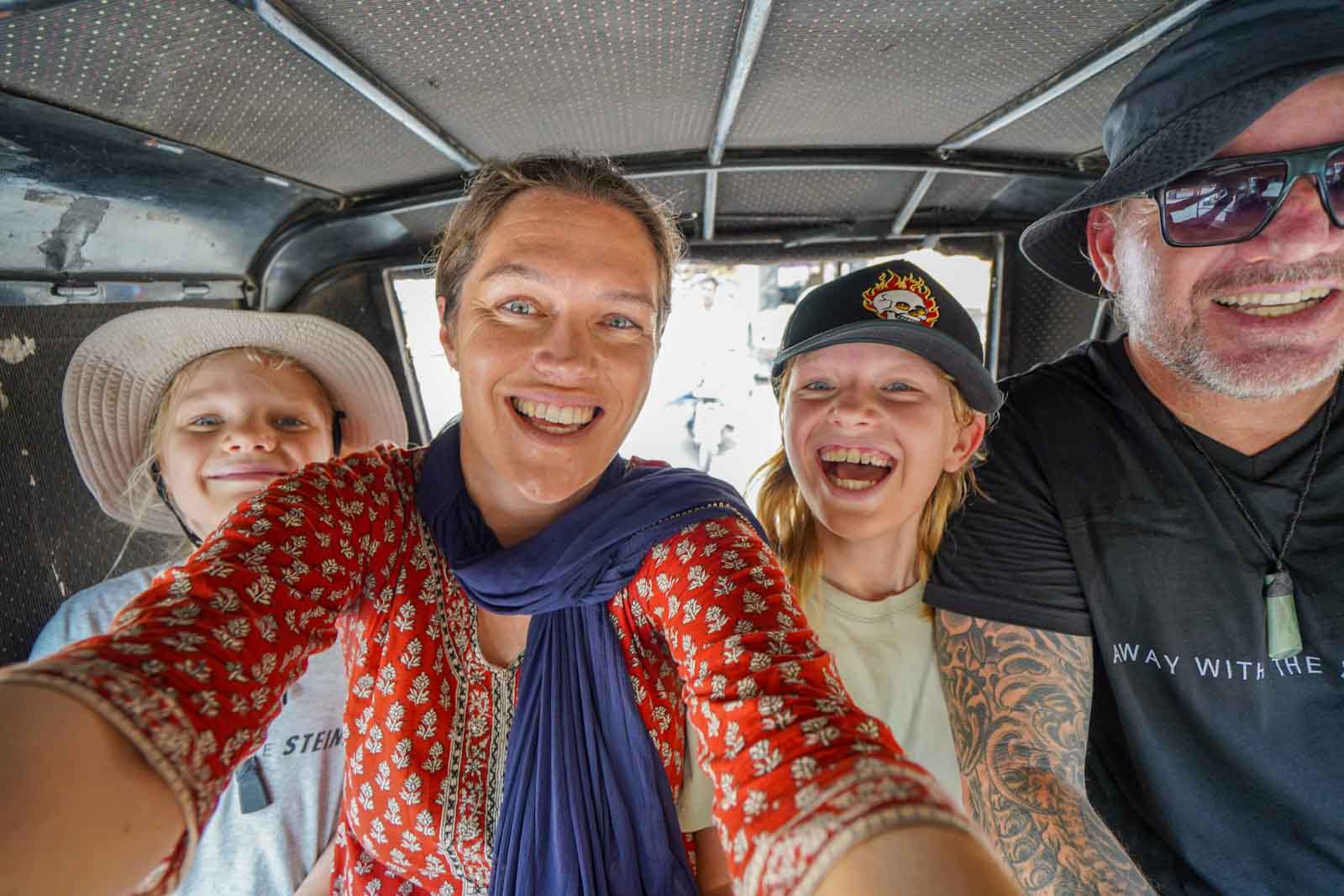
Planning a trip to India can stir up a massive mix of intense excitement and, let’s be honest, a fair amount of anxiety. As a family that has visited India a total of seven times – me, firstly as a young backpacker exploring with my sister, and later six times travelling extensively with my husband Gavin and our boys, Harry and Oscar – we reckon we’ve asked and heard all the questions in the book.
We have navigated this beautiful country with kids as young as 4 and 6, and we even invited both of our Mums to join us for a camel safari in the desert!
Pulling from the mistakes we’ve made our years of experience we have compiled a no-nonsense FAQ guide to answer your biggest questions, bust those common India travel myths, and help you pack your confidence for the adventure of a lifetime. Sound good? Let’s do it. 🙂
1. Do I need a visa for India?
Yes, the vast majority of international travellers need a visa to enter India. Luckily, the process is much easier than it used to be thanks to the electronic tourist visa (e-Visa).
You can apply online via the official government portal, upload your passport photo, and receive your approval via email before you fly. Just make sure you apply within the correct window of your arrival date and print out a physical copy to show at immigration.
2. What is the best travel route for a first-timer?
This is a big question. Because India is absolutely enormous. But trying to see it all in one go is a one-way ticket to travel burnout!
- For a Short Trip (10 Days to 2 Weeks): Stick to a tighter loop. While many do the basic Golden Triangle (Delhi, Agra, Jaipur), we highly recommend adding Jaisalmer and Udaipur to that mix. Our ultimate travel hack is flying straight from Delhi to Jaisalmer on day one to start in a smaller, gentler desert city, and then working your way back across Rajasthan to Agra and Delhi once you are “India-savvy”!
- For a Month of Travel: You can comfortably expand your Rajasthani adventure to include the holy lake town of Pushkar and the historic hub of Ajmer.
- For Two Months or More: Now you have the luxury of time to head down south to experience the tropical backwaters of Kerala, the beaches of Goa, and a completely different pace of life.
3. How much does travel in India cost?
India remains one of the most budget-friendly destinations in the world. But it isn’t just for barefoot and budget hippy backpacker types. It isn’t quite like that anymore! (Well, not as much).
It also caters just beautifully to mid-range families and luxury seekers too. You can comfortably get by on a (nowadays) backpacker budget using trains and budget guesthouses like Smyle Inn in Delhi. Mid-range travel – using private local drivers, internal flights, and gorgeous heritage hotels or homestays (like Jaipur Haveli or The Coral Tree in Agra) – is affordable and makes it great value for families and groups.
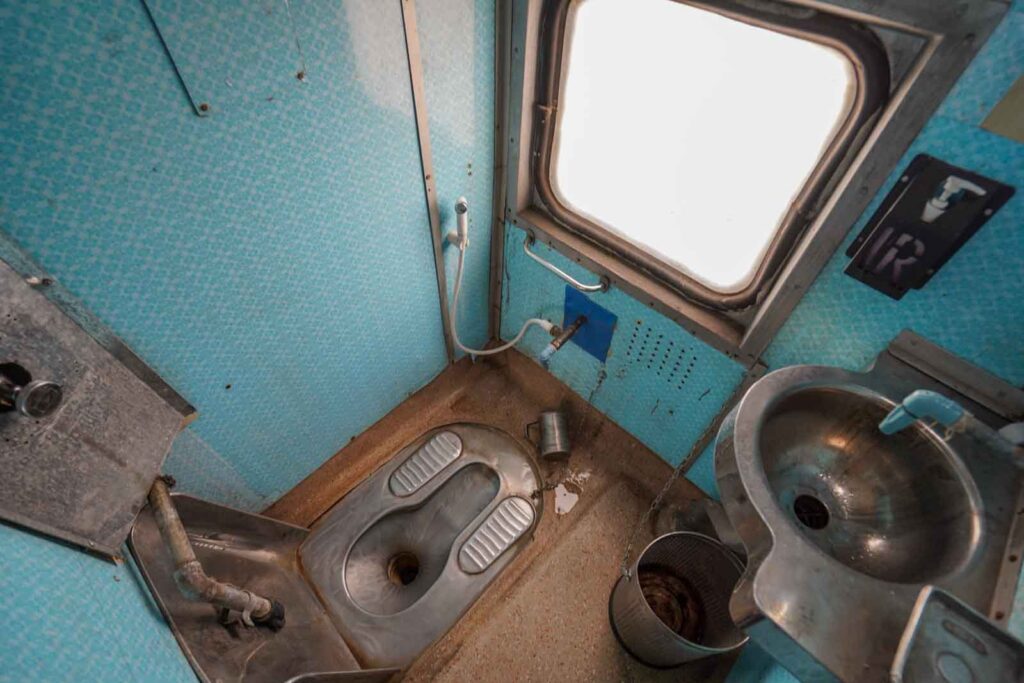
4. What is the toilet situation? Are they really that gross?
This is a major source of pre-trip dread, and the type of questions that no one really dares to ask out loud. But the truth is toilets in India are generally not as bad as people fear.
- In Accommodations: Reputable hotels, guesthouses, and heritage properties have standard, clean Western-style flush toilets.
- On Trains: AC sleeper train classes have both Western and Indian-style squat toilets. They are basic (sorry; very) but regularly cleaned during the journey and are perfectly fine to use.
Yes, you will spot those roofless, public half-wall urinals along the busy streets of places like the Main Bazaar in Pahar Ganj, but those are exclusively used by local men.
Do you need to eat with one hand and wipe with another?
No. While traditional Indian culture utilises the left hand for cleansing and the right for eating, as a traveller, you will simply use toilet paper (which you should always carry in your daypack), or the incredibly efficient hand-held water sprayers (the “bum guns”) found in almost every bathroom.
5. What on earth is the Indian head wobble?
Ahhh. Yes! The famous Indian head wobble is a beautiful, fluid gesture that you will get far too used to and encounter daily in your travels. It is a slight tilt of the head from side to side, and it can mean a dozen different things or answer to all kinds of questions, depending on the context.
Most commonly, it translates to “Yes,” “Okay,” “I understand,” or it is a polite, friendly acknowledgment that you have been seen.
It is warm and entirely non-verbal; and I pretty confidently bet that before your trip is over, you’ll find yourself doing it right back! 😀
6. Are the people friendly?
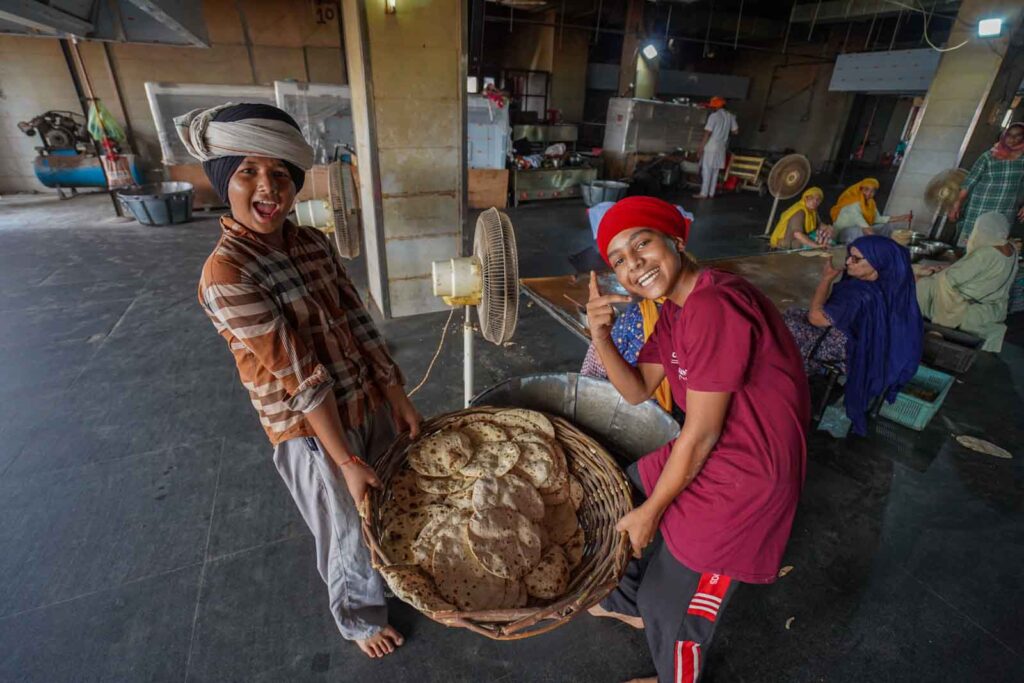
This is one of the easy questions to answer. Because the people are the absolute best part of India!
Indian hospitality is deeply rooted in the cultural belief that a guest is an extension of God. Over our seven visits to the country, we have made deep, lifelong friendships across different states. We have been invited into family homes for home-cooked lunches, shared countless cups of chai with shopkeepers, and were even invited to a massive traditional wedding in the Thar Desert!
Locals are naturally curious – and as a foreign traveller, you will get used to people staring or politely asking for family selfies. Overall though, beneath that curiosity is a warm and hospitable culture.
Read Why We Love India & Know Exactly Why You Will Too.
7. Do they speak English? Will I be able to understand it?
Yes! English is incredibly widely spoken across India, and it is actually one of the country’s official languages for government and business. Anyone working in tourism, transit, hotels, or restaurants will speak English. To some level of fluency that is.
You may occasionally need to tune your ear to the fast-paced Indian English accent, but you will have absolutely no problem making yourself understood or navigating daily life.
8. Is it safe to travel in India?
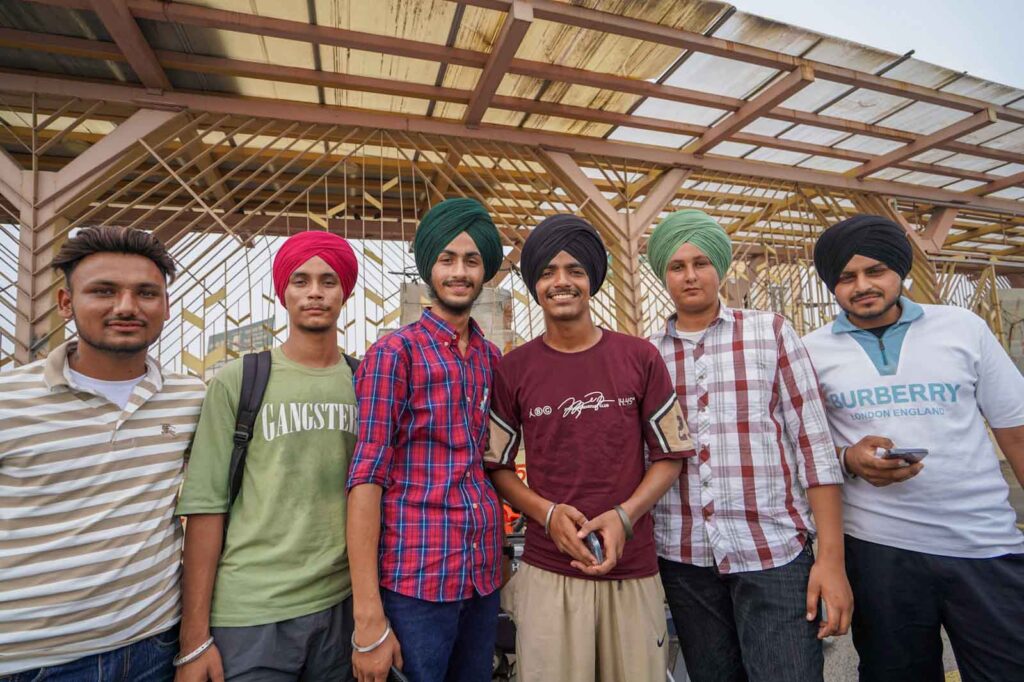
Yes, we feel safe in India. I have experienced the country from almost every angle: backpacking as a young girl taking local buses up to Darjeeling and across Rajasthan with my sister, travelling completely solo to the intense ghats of Varanasi, and navigating the country six times now since then with my husband and young kids.
We felt so content travelling in India that we even brought both of our Mums along, and nothing beats the memory of riding camels over the sand dunes of Jaisalmer with both grandmothers!
Like travelling anywhere, you need to keep your wits about you in dense transit hubs to avoid pickpockets and avoid walking alone in dark city areas at night.
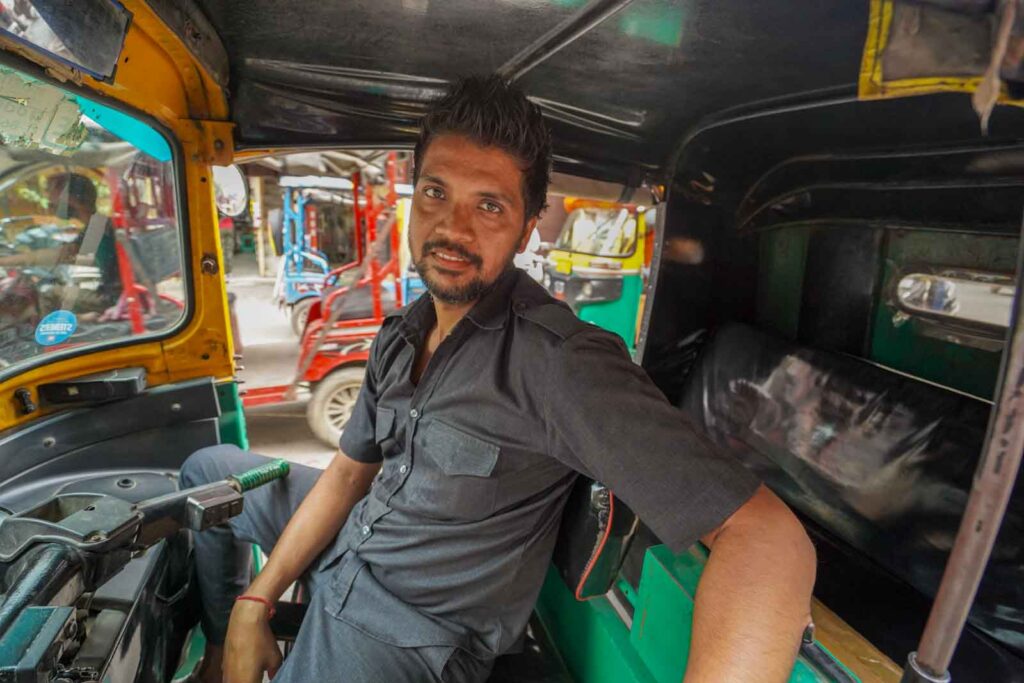
One of our top tips to anyone travelling to India is to lock in a trusted local driver (like our favourite team, Sunny and his family in Delhi), Raja in Jaipur or Ravi in Varanasi, to avoid street-level hassles.

Useful Contacts of Guides and Drivers in India
Over our seven visits so far, we have built a trusted network of awesome local drivers and hosts whom we recommend to everyone:
- In Delhi: Contact our fab driver Sunny and his brother. They are protective, highly reliable, and make conquering the capital as smooth as can be.
- In Jaipur: We always use and highly recommend Raja. He knows the Pink City inside out.
- In Jaisalmer: You cannot find a better team than Padam and the crew at Wanderlust Guesthouse. Padam is a legendary host who treats you like family and can sort out your dream desert camel safaris. Phoenix is a great local guide and the kind of guy who will invite you for lunch in his family home!
Contact These Awesome Guides
- Sunny in Delhi: +91 95997 59259
- Raja in Jaipur: +919928130309
- Raja in Varanasi: +91 85769 16590
- Padam at Wanderlust Guesthouse in Jaisalmer: +919461157753
- Phoenix (Bhawani) in Jaisalmer: +919414763000
9. When is the best time of year to visit India?
The best window to visit India for travel is during the cooler, dry winter months between October and March. The daytime weather across northern hubs like Rajasthan and Delhi is pleasant and sunny, making sightseeing exactly as you imagined in those iconic photos!
If you can, avoid the scorching summer peak (April to June) when temperatures can easily skyrocket past 40°C.
Plus if you can avoid the monsoon season (July to September) when heavy rains come, this is a suggestion that we recommend personally and strongly…
Read Getting Dengue Fever in India and How To Avoid It.
10. How do I avoid getting sick?
“Delhi Belly” is a common worry. It is one of the dreaded questions even for those that aren’t travelling! I mean, it probably is non-travellers first bit of non-helpful travel advice when you announce you are heading to India. But it isn’t as bad as they are dreading on your behalf. It doesn’t have to ruin your holiday if you take basic precautions.
We can give you some tried and true tips to avoid getting Delhi Belly:
- Water Safety: Never drink tap water. Use sealed bottled water for drinking and brushing your teeth.
- Food Prep: Eat piping hot, freshly cooked street food from busy stalls with high local turnover, and stay at recommended hotels with high hygiene standards.
- Travel Day Hack: Pack plenty of packaged, sealed snacks (like biscuits or crisps) for train rides so you don’t have to rely on train food.
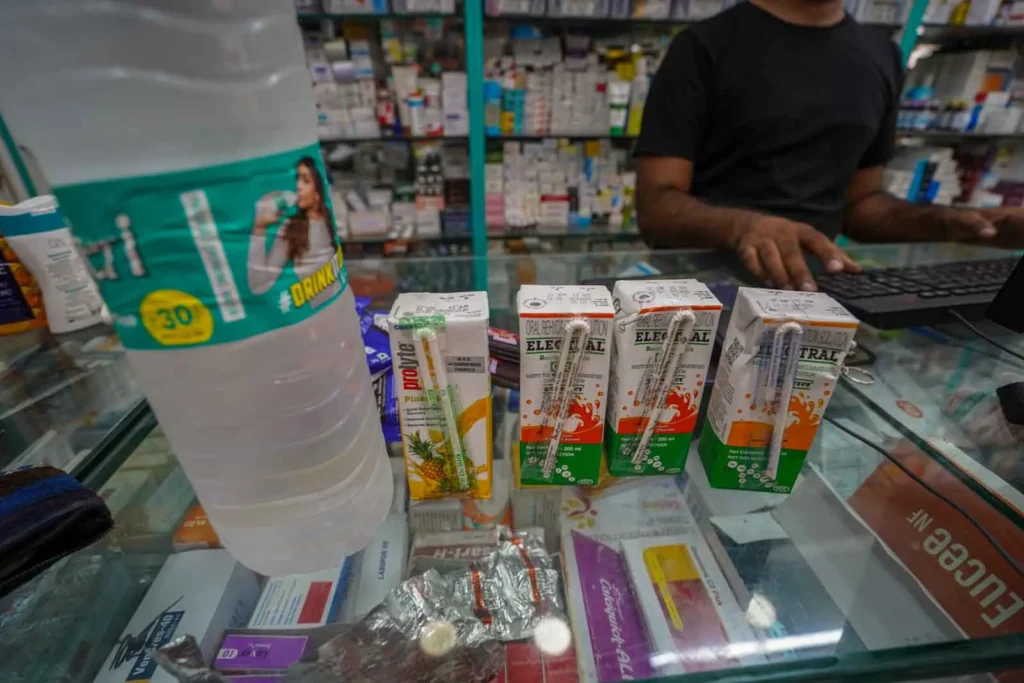
- Chemist Tip: Don’t pack heavy medical kits from home. Bring the basics. Then walk into a local Indian pharmacy the moment you land and buy local electrolyte packets (like Electral). They are dirt cheap, effective, and specifically formulated for local bugs.
11. What is the internet like? Do I need a physical SIM or an eSIM?
This is one of the questions those barefoot travellers on the hippie trail (or even more recently than that) didn’t have to worry about. But the trust is, internet connectivity in India is incredibly fast and highly accessible, with 5G coverage in almost every major city and tourist town.
- eSIM: If you want immediate connectivity the second your plane touches down, an eSIM (like Airalo) is convenient for data.
- Physical Local SIM: If you want a local phone number (useful for receiving OTP codes for local apps or calling drivers like Raja or Sunny), buying a physical local SIM card from a provider like Airtel or Jio at the airport arrival hall is cheap and has daily data allowances.
Read Best Options For a SIM card in India.
12. Are my electronics okay? What plugs do they use?
Your smartphones, cameras, and laptops will be completely fine. India operates on a 230V supply voltage and 50Hz. Most modern chargers are dual-voltage and handle this fine.
India uses three round-pin plugs (Type C, D, and M). Many of the modern hotels even have universal sockets for standard European or US plugs. But we do always recommend packing a universal adapter with a surge protector to keep your gear safe.
Your Questions Answered (Hopefully)
Phew! That is a massive list of questions, but getting those practical worries out of the way is the first step to unlocking the magic of the subcontinent. India is a destination that needs you to fully open your mind, unpack your patience (a lot of that) and lean into the flow.
So embrace the chaos, trust the journey, and get ready for the most rewarding travel experience of your life! 🙂
Questions answered and ready to plan your adventure? Check out our Ultimate Golden Triangle Itinerary to see how to link Jaisalmer with Jaipur and Agra!
Did you give our drivers and guides a message? Let us know in the comments if you connect with Sunny, Raja, Phoenix and Padam!
Safe travels, adventurers!
Read More India Inspiration
- Our Detailed & Easy 2-Day Itinerary Of Jaipur.
- Train Travel In India.
- India Tourist e-Visa: Our Step-By-Step Guide.
- 10 Things To Do In Mumbai.
- 10 Things To Do In Kochi & Kerala.
- Best Tourist SIM Card For India.
- What To Wear In India.
- 4-Day Kochi & Kerala Itinerary.
- Travelling India By Bus: Intercity, Tourist & Sleeper Buses.
Travel Planning for India & Beyond
These are the companies we use while traveling and that we would recommend to anyone planning and booking travel.
- Booking.com – The best all-around accommodation booking site. They have the widest selection of budget accommodation. It’s easy to filter and sort into price and availability with all the extras you are looking for personally.
- 12GoAsia – Book trains anywhere in Asia through 12Go.
- Skyscanner – Our favourite flight search engine. They can search small websites and budget airlines that larger search sites often miss. We book all our flights through Skyscanner.
- GetYourGuide – A huge online marketplace for tours and excursions offered all around the world. Everything from walking tours to street-food tours, cooking classes, desert safari’s and more!
- SafetyWing – A global travel insurance that covers people from all over the world while outside their home country. You can buy short or longterm; and even if you are out of the country.
- World Nomads – Travel insurance tailored for short or longterm travel and nomads (including those who have already left home). That is one of the big questions not to miss asking!

Hi! I’m Sarah. I am the self-confessed dreamer, travel-schemer and the main editor behind this blog. I love to write, and it is a dream come true to share so many experiences together and inspire others in our stories.