
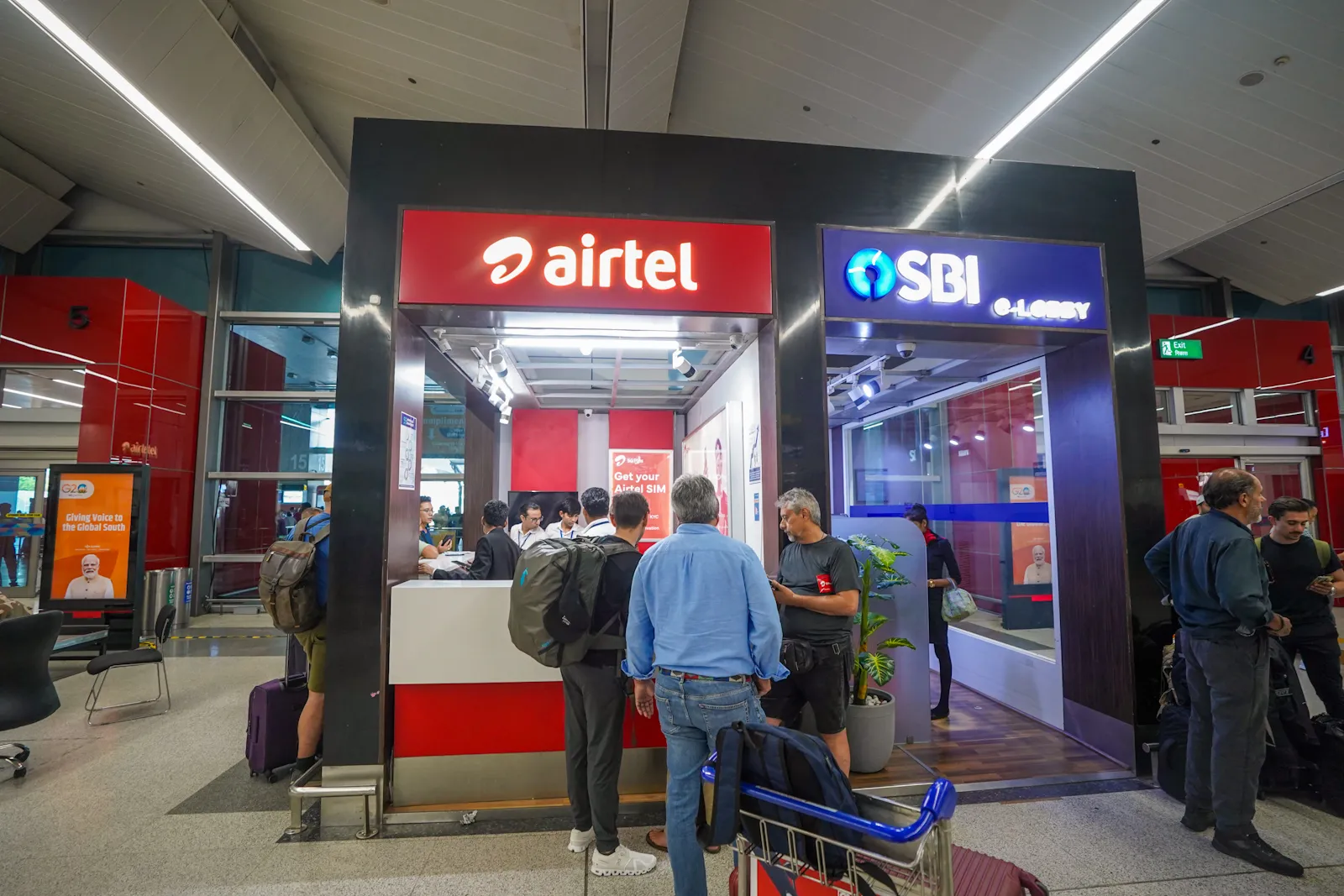
If you are starting to plan that epic first time trip to India there is a lot to consider. But move over accommodation and trains or rickshaws for transport. What about the forefront question of which SIM Card for India is best as a tourist?
There are as many options popping up on arrival in person as there will be on yours newsfeed as soon as you mention it.
However, with the range of local physical SIMs in India and the high-tech ease of modern eSIMs, choosing the right mobile plan as a tourist can feel as chaotic as a New Delhi traffic jam.
But let’s make it easy. After all, we’ve done it many more times than I care to count over these last couple of years!
This guide breaks down everything you need to know – in an honest guide – to choosing and buying a SIM Card for India.
The Big Question: Physical SIM or eSIM for India?
As far as a SIM card for India, these last couple of years, the debate between a traditional physical SIM and an eSIM has largely been settled by convenience.
eSIMs are now the gold standard for short-term travellers. They allow you to download a data plan before you even land at Indira Gandhi International Airport in New Delhi. There is no swapping of tiny plastic chips, and you keep your home WhatsApp number active effortlessly.
Physical SIM cards, however, remain the most cost-effective option for long-term travellers (those staying more than a couple of weeks). It is definitely cheaper – far cheaper with the data prices in India – and they offer local calling minutes and access to local Indian SMS, which is often required to register for government Wi-Fi or certain Indian apps.
What Do We Recommend?
We have used many eSIM’s for travel, particularly in countries where we were overlanding or not staying as long in one destination. However for South Asia, we are swayed to be bias and always choose a SIM Card for India on arrival at the airport in New Delhi.
Here is everything you need to know to choose a cheap, convenient and reliable Tourist SIM Card for India.
Best Mobile Networks in India for Tourists
While there are several players in the market, three giants dominate the landscape in terms of 5G coverage and reliability:
- Jio (Reliance Jio): Currently the market leader. Jio’s 5G standalone network is incredibly fast and has the best penetration in rural areas. If you are heading off the beaten path, Jio is usually the safest bet.
- Airtel: Often cited for having the best quality of service in major metros like Delhi, Mumbai, and Bangalore. Their international roaming and tourist-specific packs are very well-integrated.
- Vi (Vodafone Idea): A solid third choice, often offering aggressive data pricing, though their 5G rollout lags slightly behind the big two in remote regions.
Have you got your Tourist Visa For Travel To India? Read our detailed How-To Visa Guide.
Which Is The Best Local SIM Card for India?
When it comes to choosing a network in 2026, prices are competitive and coverage is consistent across the major players — unless you’re planning an expedition into the deepest Himalayan wilderness.
But for sheer convenience and reliability upon arrival: Airtel is the one we recommend.
Where to Get a SIM Card on Arrival
Getting a SIM card for India has historically been a bureaucratic marathon, but the process has been streamlined significantly over the last few years.
At the Airport (The Easiest Way)
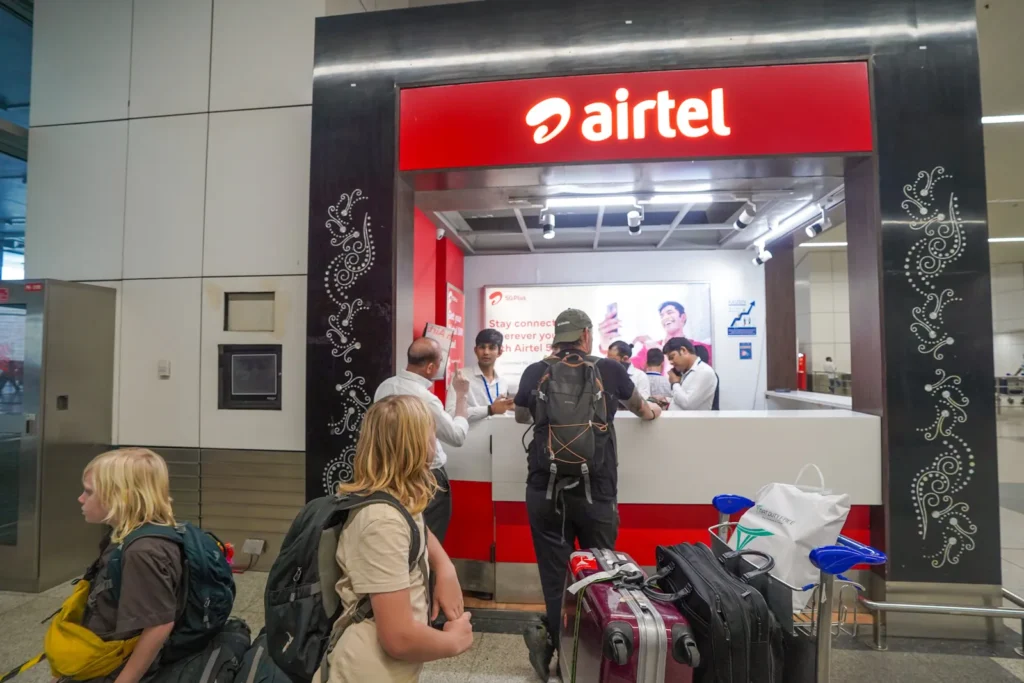
Most major international airports (Delhi, Mumbai, Bangalore, Chennai) have dedicated kiosks for Airtel (and Jio) in the arrivals hall, located just after customs.
- Pros: The staff are used to dealing with foreign passports; they know the activation process inside out.
- Cons: You will pay a convenience premium. Plans here are often slightly more expensive than in the city.
But to be perfectly honest the ‘convenience premium’ is only a few dollars more!

In the City (The Cheapest Way)
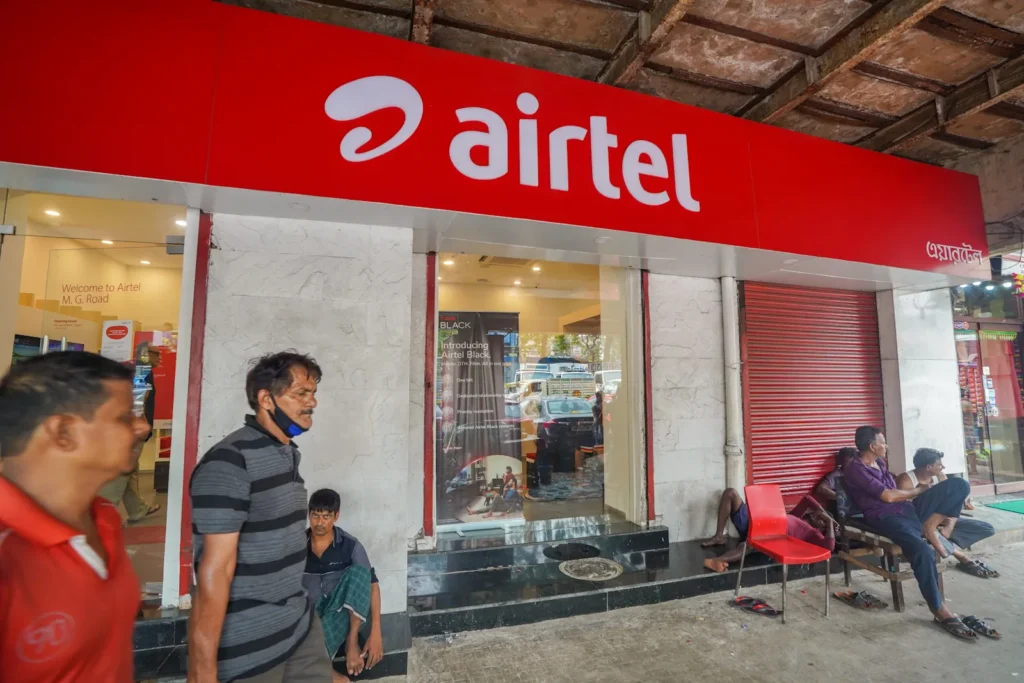
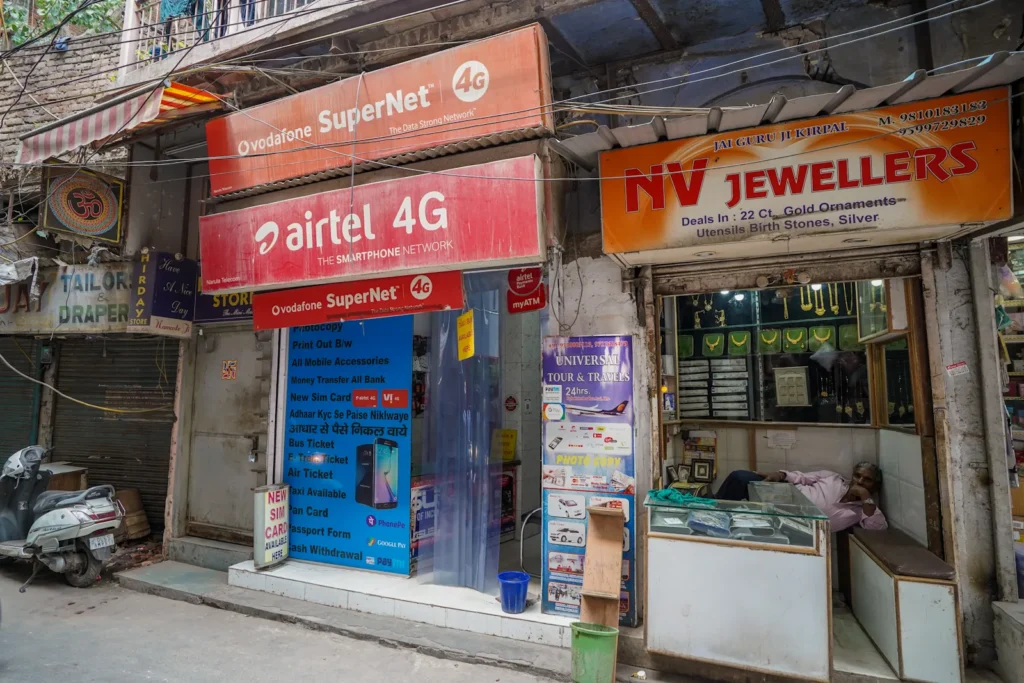
You can visit an official Airtel or Jio ‘Experience Center’ in any major city. Avoid small hole-in-the-wall mobile recharge shops for your initial activation; they often struggle with the specific document upload requirements for foreign nationals.
- Pros: Local rates and more plan variety.
- Cons: It can take longer, and you’ll need to navigate there without data first.
Choosing a SIM Card for India
Obviously you could save a few rupees here and there or shopping about if you have time (lots) up your sleeve. But after doing it many times over, we unanimously recommend getting a local Airtel SIM Card for India at the airport on arrival.
It just makes it that much easier.
Documents Required
India takes telecommunications security very seriously. To get a local physical SIM, you cannot simply walk in and buy one like you might in Europe or Southeast Asia.
You will need:
- Original Passport: They will scan your photo page.
- Valid Indian Visa: Whether it’s an e-Visa or a regular sticker visa, they need to see the entry stamp or the printed e-Visa clearance.
- Proof of Address in India: This is usually just the address and phone number of your first hotel or hostel. Keep a screenshot of your booking handy.
- A Digital Photo: The agent will take a live ‘e-KYC’ (Electronic Know Your Customer) photo of you at the desk using their tablet.
- An Alternate Number: This is the tricky part. They need a number to send an activation OTP (One-Time Password). Most travellers use their home number (ensure roaming is on for just five minutes to receive the text) or the number of a friend already in India.
If you are doing it at the Tourist Airtel kiosk in the airport they are used to this last step and handle all that for you. It makes it simple.

Cost of Mobile Data in India
India remains one of the cheapest places in the world for mobile data.
While prices have risen slightly with the nationwide 5G rollout, it is still incredibly affordable.
- Tourist Physical SIM Packs: Expect to pay between ₹800 and ₹1,200 ($10–$15 USD) for a 28-day Tourist Pack. This usually includes 1.5GB to 2.5GB of daily data and unlimited local calls.
- Long-Term Packs: If you have an Indian friend who can help you get a standard SIM, 84-day packs with massive data limits often cost less than ₹1,500 ($18 USD).
Options for eSIM Cards for India
If you don’t want to deal with paper trails and airport kiosks, an eSIM is your best friend. In 2026, several providers offer excellent India-specific data plans.
1. Airalo (The Reliable Choice)
Airalo’s ‘Indotel’ plans are the go-to for most travellers. You can buy a 1GB, 3GB, or 5GB pack.
- Pros: Instant activation, very user-friendly app.
- Cons: Data only (no local phone number).
2. Holafly (Unlimited Data)
If you are a digital nomad or a content creator uploading heavy video files, Holafly offers unlimited data plans for India.
- Pros: No need to worry about topping up.
- Cons: More expensive than Airalo and does not allow data tethering (hotspotting) on all plans.
See our detailed Holafly review about our experience with the Unlimited Data Europe Holafly eSIM.
- Use our code THESTEINERFAMILY for 5% your Holafly eSIM purchase.
3. Nomad
Nomat often competes with Airalo on price and sometimes offers larger 10GB or 20GB bundles which are great for a three-week trip.
How to Activate and Top Up: SIM Card for India
Activation
For a Physical SIM, the card is rarely active the moment you leave the shop. It usually takes 2 to 4 hours. Once the signal bars appear, you may need to call a specific number (like 59059 for Airtel) to ‘tele-verify’ by entering the last four digits of your passport.
For an eSIM, activation is usually handled via a QR code sent to your email. You simply scan it in your phone’s ‘Cellular’ settings.
Topping Up (Recharging)
If you run out of data or your 28 days are up, topping up is easy:
- The Provider App: Download the MyJio or Airtel Thanks app. You can see your balance in real-time. Note: These apps sometimes reject foreign credit cards.
- Third-Party Apps: Use Amazon Pay (India), Recharge.com, or Ding. These are much more friendly toward international Visa and Mastercard holders.
- Local Shops: Look for the Airtel or Jio signs at any small grocery store. You give them your phone number and cash, and they perform the top-up for you instantly.
Tips for Staying Connected in India
Whichever SIM Card for India that you choose, there are a few tips to make those travels even smoother:
- Download Offline Maps: Even with 5G, India has dead zones, especially inside ancient stone forts or deep in the narrow alleys of Varanasi. Always have the Google Maps offline area for your city downloaded.
- The OTP Reality: Many Indian apps (like Zomato for food delivery or IXIGO for trains) require an Indian mobile number to send an OTP. If you use a data-only eSIM, you might find yourself unable to use these apps. If you plan on a long-term stay, a physical SIM with a local number is worth the effort.
- Carry a Power Bank: 5G and constant GPS usage in the heat of an Indian summer will drain your battery faster than usual.
- Use Public Wi-Fi with Caution: Major railway stations offer ‘RailWire’ Wi-Fi. It’s fast, but it requires an Indian number to receive a login code. This is another reason the local physical SIM wins for the true India experience.
- Two-Factor Authentication (2FA): Before you leave home, ensure your bank and social media aren’t going to lock you out because they are trying to send a text to your home SIM which you’ve just taken out of your phone. Switch to an app-based authenticator (like Google Authenticator) before you fly.
Summary: Which Should You Choose?
Obviously, it is a first decision before you arrive.
But we reckon it makes it simpler just depending on how long you are travelling for:
- If you are in India for 1–10 days: Get an Airalo eSIM. It’s fast, you land with data, and you avoid the paperwork.
- If you are in India for 2 weeks or more: Get a Airtel SIM at the airport. The local number is invaluable for booking trains, ordering rickshaws via Uber/Ola, and getting food delivered to your hotel.
India is more digitally connected now than ever before. Whether you’re sharing a reel of the Taj Mahal or calling a local guide in Kochi, the right SIM card ensures you spend your time looking at the sights, and not at a ‘No Service’ icon.
Enjoy India! There is much of this incredible country to see.
Happy travels, and enjoy also the incredible connectivity of India!
Accommodation: Where to Stay in India
Pigeons aside (Ajmer) there are some great places to stay in India.
Where We Stay in Delhi
- New Delhi Airport – Mid-Range: Taurus Sarovar Portico
Beautiful hotel only a few km’s from Delhi International Airport. A great first stop arriving in India with buffet breakfast included and a restaurant onsite. - Delhi – Budget: Hotel Hari Piorko
Good location in the heart of the Main Bazaar, Delhi. Close to restaurants and train station. No view from rooms. - Delhi – Budget: Smyle Inn
Extremely basic hotel in small back alley. Very friendly, helpful staff and simple breakfast included. Just off Main Bazaar.
Travel Planning for India & Beyond
These are the companies we use while traveling fulltime as a family and that we would recommend to anyone planning and booking travel.
- Booking.com – The best all-around accommodation booking site that constantly provides the cheapest and lowest rates. They have the widest selection of budget accommodation and it’s easy to filter and sort into price and availability with all the extras you are looking for personally.
- Skyscanner– This is by far our favourite flight search engine. They are able to search small websites and budget airlines that larger search sites often miss. We book all our flights through Skyscanner.
- GetYourGuide– Get Your Guide is a huge online marketplace for tours and excursions offered all around the world. Everything from walking tours, to street-food tours, cooking classes, desert safari’s and more!
- SafetyWing – A global travel insurance that covers people from all over the world while outside their home country. You can buy it short or longterm; and even if you are out of the country.
- World Nomads – Tailored travel insurance (including for those who have already left home) – MAKE SURE YOU HAVE GOOD TRAVEL INSURANCE BEFORE TRAVELING TO INDIA!

Hi! I’m Sarah. I am the self-confessed dreamer, travel-schemer and the main editor behind this blog. I love to write, and it is a dream come true to share so many experiences together and inspire others in our stories.