

There are few places in the world that truly live up to the hype, but the Taj Mahal is undoubtedly one of them. It is a testament to architectural genius – that ever-iconic Wonder Of The World – and a love story for the ages.
Though whether you are visiting as part of a classic Golden Triangle itinerary or making a dedicated pilgrimage to Agra, the experience can be as overwhelming as it is beautiful. From navigating the early morning fog to avoiding the Friday closures, there is a lot to consider.
In this Guide to the Taj Mahal, we’re breaking down everything you need to know to make your visit to the Taj Mahal as seamless and magical as possible.
Ready? 🙂
- About the Taj Mahal
- Getting There
- Getting Around Agra
- Planning Your Visit
Best Time To Visit
Tickets & Entry - Things To See & Do
What To Wear
What To Bring - Where To Stay in Agra
What is the Taj Mahal?
The Taj Mahal is world-renowned not just for its physical grandeur, but as one of the greatest love stories ever told.
This magnificent white marble structure is a mausoleum, commissioned in 1632 by the Mughal emperor Shah Jahan. Its purpose was to house the tomb of his favourite wife, Mumtaz Mahal, after her tragic death in 1631. She passed away during childbirth while delivering their 14th child, an event that reportedly left the emperor completely heartbroken.
Today, it stands as a UNESCO World Heritage Site, one of the New Seven Wonders of the World, and a global crown jewel of art and architecture. Yet, beyond the titles, the essence of the Taj Mahal remains a story of a promise kept.
The Story Behind the Taj Mahal
As Mumtaz Mahal lay on her deathbed, Shah Jahan made a final promise to his beloved: he would “erect a monument to match her beauty.”
The result was an exquisite feat of human labour and devotion. It took 22 years and tens of thousands of skilled workers—hailing from across the Indian subcontinent, Persia, and Central Asia—to bring the emperor’s vision to life.
To put the scale of the project into perspective, it is estimated that in today’s currency, the construction would have cost somewhere in the realm of $35 billion!
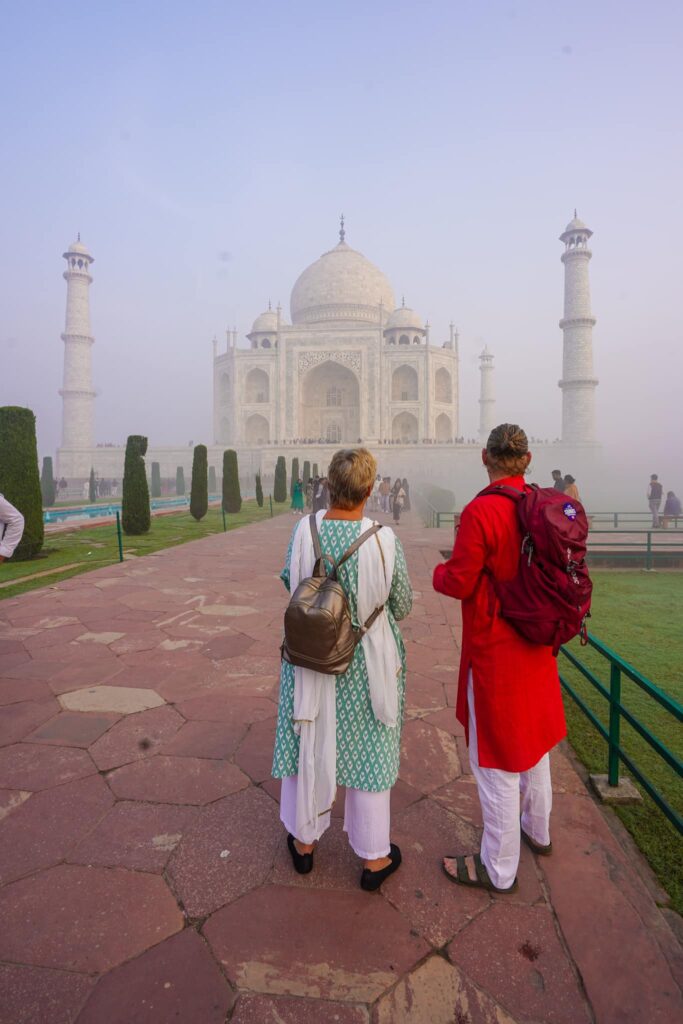
An Architectural Masterpiece
Physically, the Taj Mahal is a marvel of both engineering and artistry, representing the pinnacle of Indo-Islamic architecture.
The structure features intricate marble inlays of precious stones and carvings. But one of its most magical qualities is how the white marble reflects different hues—from soft pinks at dawn to shimmering under the moon.
To this day, it remains a global crown jewel of art and an eternal symbol of Shah Jahan’s devotion.
Pretty romantic huh? 🙂

Part 1: Logistics – Getting To and Around Agra
Agra is part of India’s famous Golden Triangle, making it exceptionally well-connected to the capital and the Pink City of Jaipur.
Getting to Agra from Delhi or Jaipur
These are India’s most visited tourist destinations and hence the city of Agra is well connected by road, rail and air.
By Train
- By Train: The fastest and most comfortable way to reach Agra is by rail.
- From Delhi: The Gatimaan Express is the star of the show. It departs from Hazrat Nizamuddin (NZM) at 8:10 AM and reaches Agra Cantt (AGC) in just 1 hour and 40 minutes.
- From Jaipur: The Agra Fort SF Express takes about 4.5 hours and drops you right at Agra Fort station.
It is a great part of the experience of travel in India to do a leg or two by train.
- Tip: Book your train tickets in advance via 12GoAsia or the IRCTC website, especially for the high-speed Gatimaan, as it sells out quickly!
By Road
- By Road: If you prefer a private experience, hiring a driver for the 3.5 to 4-hour journey from Delhi is easy. The Yamuna Expressway is a modern, fast toll road that makes the drive quite pleasant.
Getting Around Agra
Agra is a bustling city, and while the area around the Taj Mahal is a ‘No-Drive Zone’ (to prevent pollution from yellowing the marble), getting to the gates is easy.
- Rickshaws: Electric and cycle rickshaws are the most common way to get around. Agree on a price before you hop in.
- Walking: If you stay in the Taj Ganj area, you can easily walk to the East or South gates.
Part 2: Planning Your Visit to the Taj Mahal
For most travellers, the Taj Mahal is a once-in-a-lifetime destination. You likely won’t change your India trip due to changes in the weather forecast. But choosing the right month (for India overall) can make a difference.
Best Time of Year to Visit
It does make a difference (in comfort and photos) when it comes to the Taj.
- October to March: This is the peak season with the best weather—mild days and cool nights. The Catch:Morning fog can be incredibly thick in December and January, sometimes completely hiding the monument until 10:00 AM.
- April to June: It is searingly hot (40°C+). If you visit now, go at the crack of dawn and retreat to a pool by midday.
- July to September: Monsoon season brings lush green gardens and fewer crowds, but the humidity is high, and the skies are often grey.
THE MOST IMPORTANT TIP: No Fridays!
The Taj Mahal is closed to the public every Friday. This is when the local community uses the onsite mosque for prayers. Do not be the traveller who arrives in Agra on a Thursday night only to find out they can’t go inside the next morning!
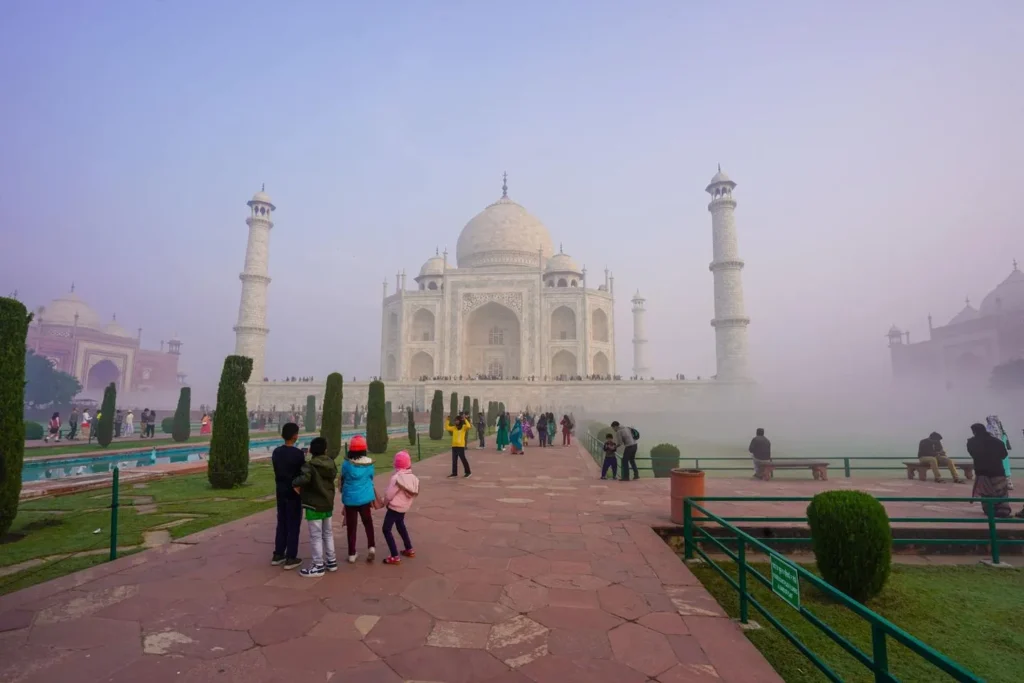
Best Time of Day
Without question, Sunrise is the best time to visit.
- The Crowd Factor: While ‘sunrise at the Taj’ isn’t exactly a secret, it is still the quietest the complex will be all day.
- The Light: Watching the white marble change from a soft grey-blue to a warm pink and then a dazzling white as the sun hits it is a bucket-list moment.
- The Heat: In the hotter months, getting in at 6:00 AM allows you to finish your visit before the midday sun becomes unbearable.
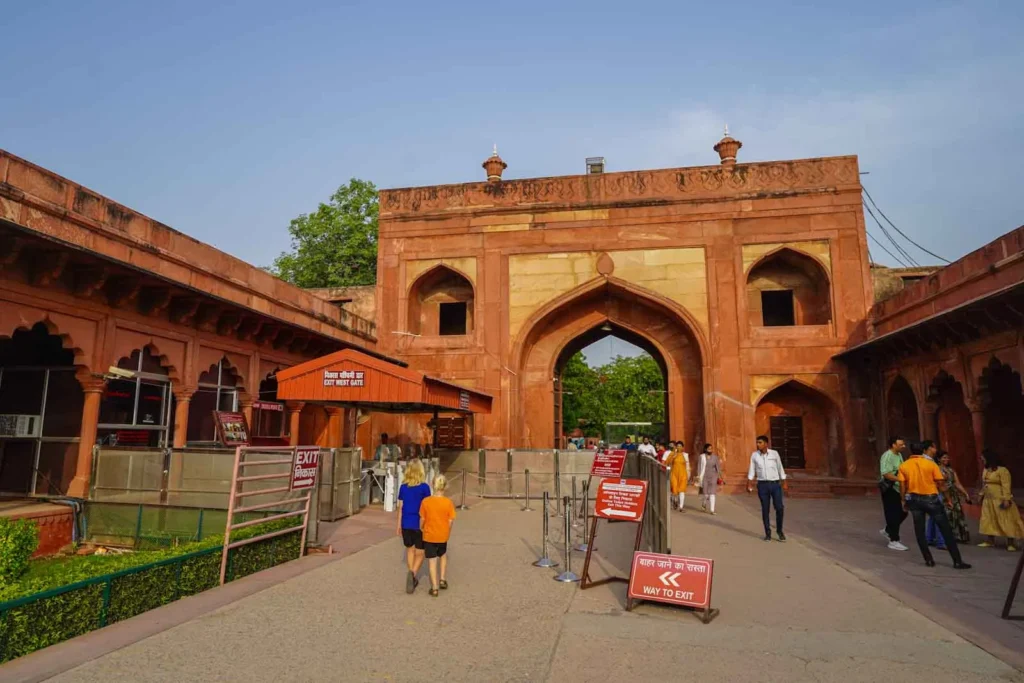
Part 3: Tickets and Entry to Taj Mahal
Where do you buy tickets for the Taj Mahal?
It is easy to buy tickets for the Taj Mahal online or from your accommodation in Agra.
Ticket Options and Costs
As of 2026, there are two main types of tickets for foreigners:
- Taj Mahal Only: Entrance to the gardens and the complex.
- Taj Mahal + Mausoleum: This includes entry into the actual tomb building.
How much does it cost to visit the Taj Mahal?
- Cost: A foreign tourist ticket with mausoleum entry costs 1300 INR (approx. $16 USD).
- Kids: Entry for children under 15 years old is FREE, which is a huge win for families!
Where to Buy
You can buy tickets at the window near the gates, but the queues can be long and frustrating.
We highly recommend buying online through the official Ministry of Culture website. You’ll get a QR code on your phone which you can scan at the entrance.
- Tip: You can ask your accommodation in Agra to buy the tickets online for you.

Part 4: What to See and Do at the Taj Mahal
Walking in through the main entrance to the Taj Mahal is a breathtaking experience.
You can just look (and photograph) it in awe. But there are several parts of the Taj Mahal complex that are worth heading for to see specifically.
1. The Great Gate (Darwaza-i-Rauza)
This is your first view of the Taj. The archway is designed to perfectly frame the monument. As you walk toward it, the Taj appears to shrink—a clever optical illusion created by the Mughal architects.
2. The Charbagh (Paradise Gardens)
The gardens are divided into four quadrants by water channels, representing the four rivers of Paradise mentioned in Islamic texts.
- Tip: This is where you will find the famous “Diana Bench” for your classic photo op.
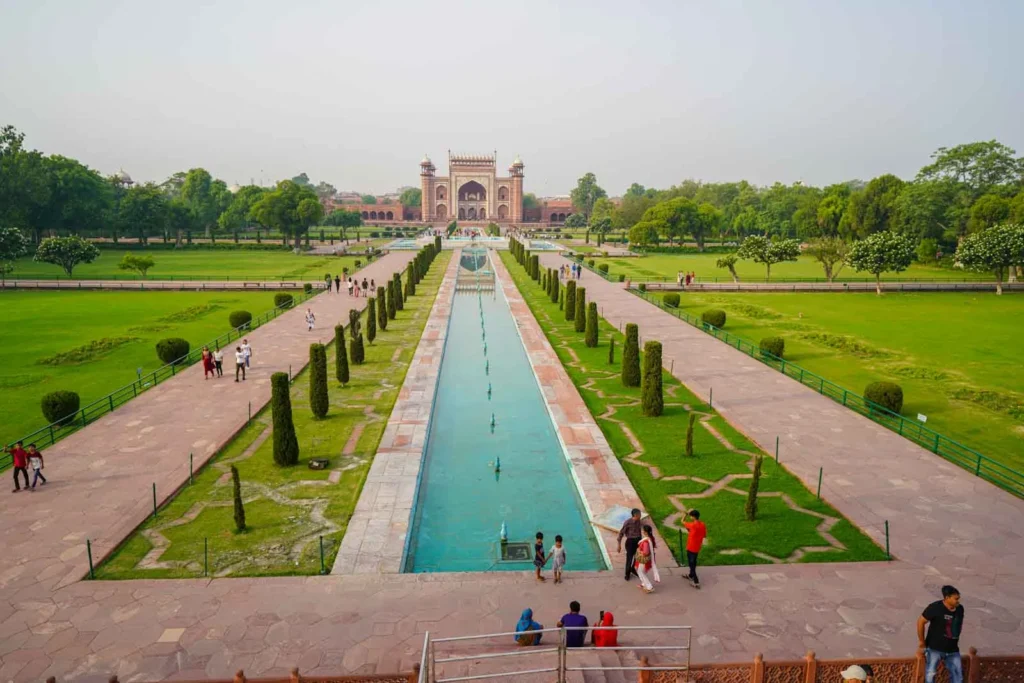
3. The Mausoleum
If you’ve paid for the interior ticket, head up onto the marble plinth (you’ll need to put on the provided shoe covers).
Inside, the level of detail is staggering. The marble is inlaid with semi-precious stones like lapis lazuli and malachite in a technique called Pietra Dura.
- Note: Photography is strictly prohibited inside the inner tomb chamber.
4. The Mosque and the Jawab
On either side of the Taj sit two identical red sandstone buildings.
To the west is an active mosque; to the east is the Jawab (Answer), built purely for architectural symmetry. These buildings are often overlooked but offer incredible perspective shots of the Taj.

Part 5: What to Wear and What to Bring to the Taj Mahal
It is a once in a lifetime experience! You want to get it right as far as what to wear to the Taj Mahal and what to bring and not bring.
Dress Code
There is no “official” dress code, but the Taj Mahal is a site of immense cultural and religious significance. Out of respect, keep your shoulders and knees covered.
In general, India is a conservative country, and it is respectful to dress accordingly.
- Colour Choice: Since the monument is white, wearing bright, vibrant colours (reds, yellows, oranges, or blues) makes for incredible photos!
- Footwear: You will be doing a lot of walking, so wear comfortable shoes. If you go up on the plinth, you’ll be given shoe covers to wear over your shoes.
The ‘Prohibited Items’ List
Security is very tight. To save time at the bag check, only bring the essentials.
We made the mistake the first time that Oscar had his precious toy monkey, Pongo in Gavin’s bag. However, bringing toys or ‘icons’ that could be of religious symbolism are some of the things that are banned.
So poor old Pongo had to be put in the storage closets for our visit to the Taj Mahal!
- Banned: Large backpacks, tripods, drones, food, tobacco, lighters, and electronic chargers/power banks.
- Allowed: Your phone, camera, a small water bottle (often provided with your ticket), and your passport.

Part 6: Where to Stay in Agra
Where you stay in Agra can absolutely add to your sunrise mission to the Taj Mahal.
It is a touristic city with lots of accommodation options. These are the hotels in Agra near the Taj Mahal including the ones that we use and can recommend for your stay in Agra and visiting the Taj Mahal.
Mid-Luxury & Splurge
- The Oberoi Amarvilas
This is arguably the best hotel in India. Every single room has an uninterrupted view of the Taj Mahal. If it’s in your budget, there is no better way to experience Agra. - Hotel Taj Resorts
Beautiful resort style accommodation only 600 metres from the Taj. Enjoy the incredible restaurant on-site and refreshing swimming pool.
Mid-Range & Family Friendly
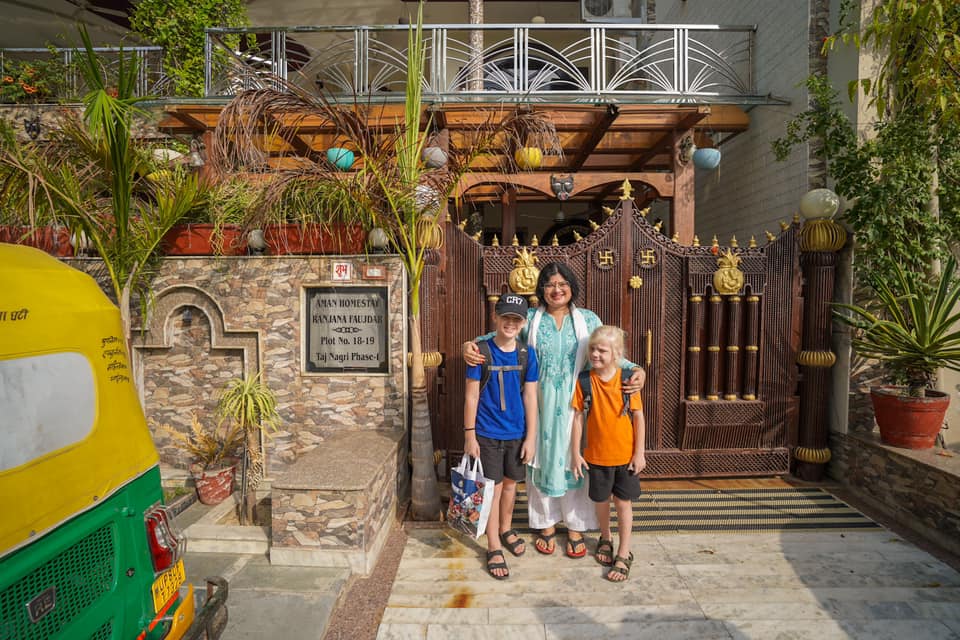
- Aman Homestay
Our personal favourite. It’s run by a lovely family and is just a short rickshaw ride from the gates with rooftop views of The Taj Mahal. Rickshaw driver service and home cooked meals. We stay here with our Group Trips to India. - The Coral House Homestay by the Taj
Located only 700 metres from Taj Mahal with a relaxing homestay feel and comfortable common areas. A great dinner and breakfast option. We really enjoyed staying here.
Budget
- Zostel Agra
Clean, social, and very close to the East Gate. Great for solo travellers and backpackers.
Part 7: Final Tips for a Successful Visit to the Taj Mahal
Pack your patience and keep these practical tips in mind:
- Hire a Guide (Carefully): There are hundreds of “guides” at the gates. If you want one, ensure they are official government-approved guides with a valid ID card. They can help navigate the crowds and know all the best photo angles.
- Beware of ‘Free’ Tours: Some rickshaw drivers will offer to take you to “hidden viewpoints” for free. This almost always ends in a high-pressure sales pitch at a marble or carpet shop.
- View from Across the River: For a different perspective, head to Mehtab Bagh (The Moonlight Garden) at sunset. It’s located directly across the Yamuna River and offers a stunning, symmetrical view of the Taj without the massive crowds.
- Stay Hydrated: Agra is dusty and can be incredibly hot. Drink plenty of bottled water (not tap!) and carry electrolytes if you’re visiting in the summer.

Final Thoughts
The Taj Mahal is one of those rare places that manages to be both a crowded tourist hub and a moving and famous Wonder of the World!
If you arrive with patience (the kind needed in India), dress for the occasion, and get there early enough to see the first light hit that white marble, you will understand exactly why it has captivated the world for centuries.
It really is as beautiful as you hope it will be!
Read More India Inspiration
- Ultimate India Food Tour: 10 Must-Try Treats.
- India Tourist e-Visa: Our Step-By-Step Guide.
- 10 Things To Do In Kochi & Kerala.
- Best Tourist SIM Card For India.
- What To Wear In India.
- 10 Tips To Avoid Delhi Belly In India.
- 4-Day Kochi & Kerala Itinerary.
- Travelling India By Bus: Intercity, Tourist & Sleeper Buses.
- 10 Iconic Things To Do In Kolkata.
Travel Planning for India & Beyond
These are the companies we use while traveling and that we would recommend to anyone planning and booking travel.
- Booking.com – The best all-around accommodation booking site. They have the widest selection of budget accommodation and it’s easy to filter and sort into price and availability with all the extras you are looking for personally.
- 12GoAsia – Book trains anywhere in Asia through 12Go.
- Skyscanner – Our favourite flight search engine. They can search small websites and budget airlines that larger search sites often miss. We book all our flights through Skyscanner.
- GetYourGuide – A huge online marketplace for tours and excursions offered all around the world. Everything from walking tours to street-food tours, cooking classes, desert safari’s and more!
- SafetyWing – A global travel insurance that covers people from all over the world while outside their home country. You can buy short or longterm; and even if you are out of the country.
- World Nomads – Travel insurance tailored for short or longterm travel and nomads (including those who have already left home). Make sure you have travel insurance before visiting the Taj Mahal!

Hi! I’m Sarah. I am the self-confessed dreamer, travel-schemer and the main editor behind this blog. I love to write, and it is a dream come true to share so many experiences together and inspire others in our stories.