There are some travel experiences that gently expand your comfort zone, and then there are those that completely shatter it. Visiting Shree Karni Mata Mandir—famously known across the globe as the Rat Temple of India—falls squarely into the latter category.
Here is everything you need to know – and a whole lot of information you didn’t know you had missed out on – to plan your visit to the famous Rat Temple in Bikaner.
- Should You Visit?
- About the Rat Temple
- Visiting the Rat Temple
- What Is It Really Like?
- Practical Information
- How To Get There
- Other Things To Do In Bikaner
- Getting To Bikaner
- Accommodation
Should You Visit the Rat Temple in Bikaner?
Yes! Go on. It is undeniably weird and pretty darn raw to any foreign traveller. But it is totally unique – and that is what makes travel in India so special right?
Do it.
What is Shree Karni Mata Mandir?
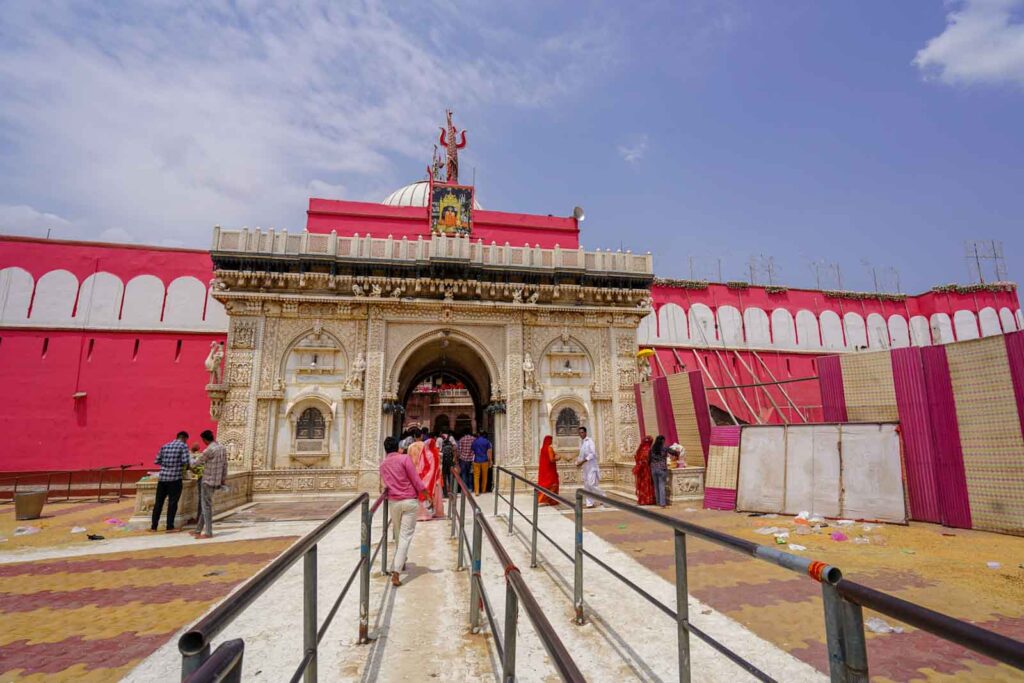
Located in the small town of Deshnoke, about 30 kilometers south of Bikaner in the desert state of Rajasthan, this Hindu temple looks entirely normal from the outside.
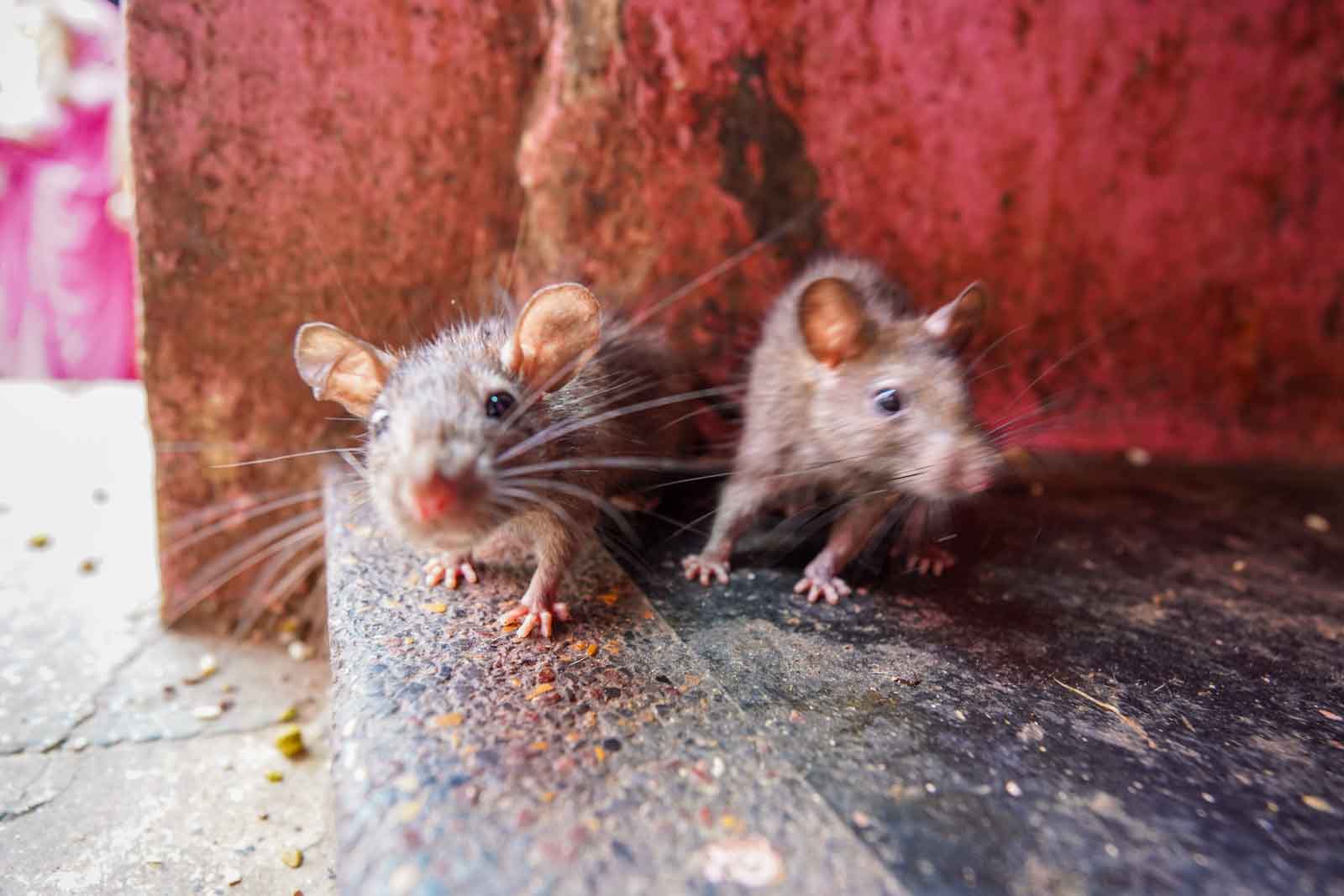
The outer facade of the temple features beautiful, intricate white marble carvings and heavy silver doors. But once you step inside, you are greeted by an unapologetically surreal, grimly unusual sight: over 25,000 rats roaming freely, drinking from massive metal bowls of milk, and scurrying across the marble floors.
Ready for this?!
Visiting Shree Karni Mata Mandir: The Rat Temple
As a visitor, there is no other way to describe it except that it is utterly unique. Yet, for thousands of devoted pilgrims who travel here from all over India, it is a deeply sacred place of worship, motherhood, and family legacy.
If you have the curiosity (and the courage) to add this improbable site to your Rajasthan itinerary, here is the complete guide on how to visit, the fascinating legend behind it, and what it’s really like on the ground.
The Legend of Karni Mata: Why the Rats are Holy
To understand the Rat Temple, you must first understand the history.
The temple is dedicated to Karni Mata, a 14th-century Hindu warrior sage from the Charan caste who is revered as an incarnation of the Goddess Durga (the goddess of power, protection, and motherhood). She possessed extraordinary powers and lived a long life performing miracles across the region.
The Family Legend
The reason for the thousands of rats stems from a heartbreaking family legend:
One day, Laxman, one of Karni Mata’s stepsons (or the son of a close clansman, depending on the telling), tragically drowned in a pond in Kapil Sarovar while trying to drink from it. Heartbroken, Karni Mata begged Yama Raj, the God of Death, to return the boy to life.
At first, Yama refused, stating that the boy’s soul had already transitioned. But Karni Mata was powerful.
Reincarnated as Rats
She struck a deal with the God of Death: from that moment forward, Laxman and all of Karni Mata’s male descendants and family members would not be claimed by Yama. Instead, they would be temporarily reincarnated as rats (kabbas) and live safely under her protection within her temple. When the rats pass away, they are reincarnated back into humans within her clan.
Because of this pact, the rats are lovingly referred to by worshippers as kabbas, which translates to “little children.”
They are not considered pests; they are considered holy, loved relatives.
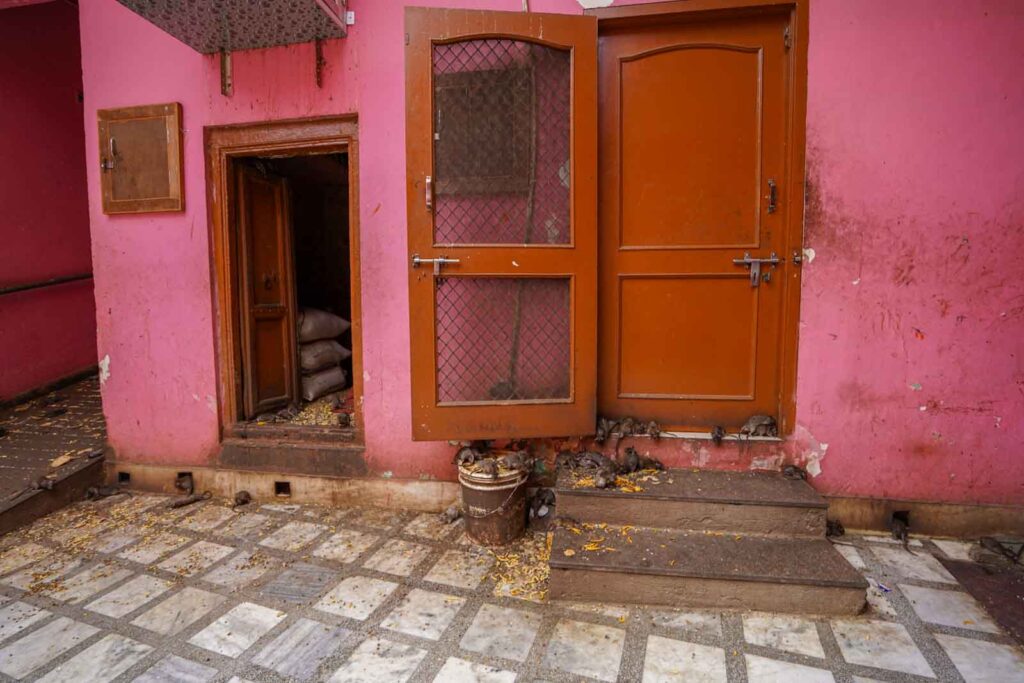
What It Is Really Like When You Get There
Let’s address the immediate anxiety most travellers have: Yes, you have to take your shoes off.
Like all Hindu temples, footwear is strictly forbidden inside. You can leave your shoes at the designated counter outside or wear a pair of thin disposable socks if you are squeamish (highly recommended).
Here is what to expect once you cross the threshold and actually get inside:
1. Rats, Rats, and More Rats
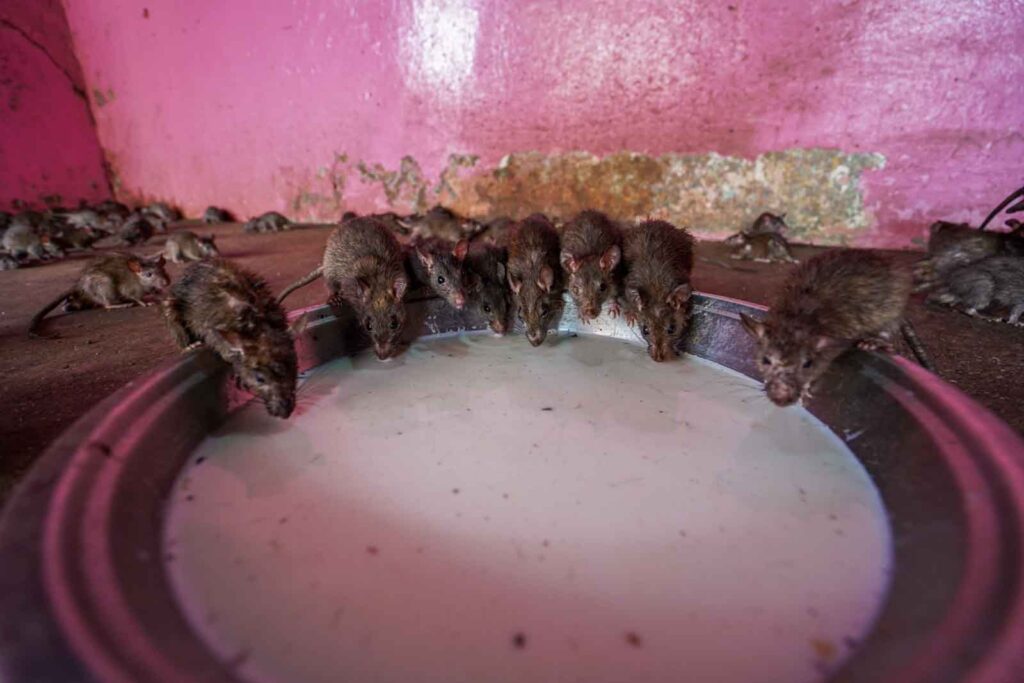
While it is estimated that the temple houses up to 25,000 rats, you won’t see them all at once. During the heat of the day, many sleep inside the walls, under floors, and within the thousands of custom-made crevices in the courtyard. (Thank goodness!).
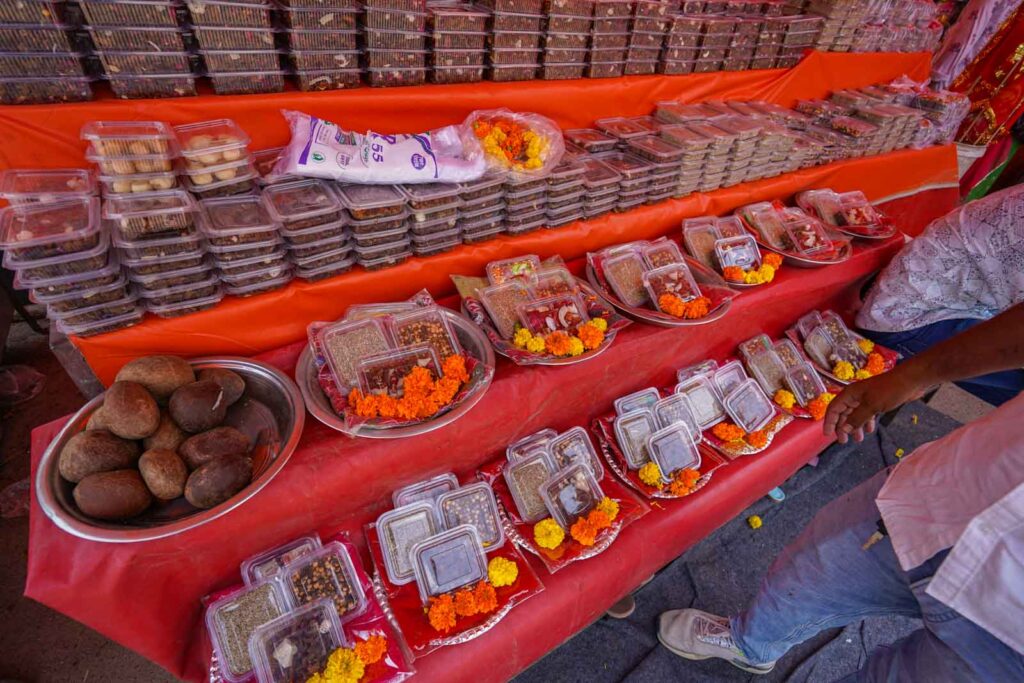
However, you will see hundreds of them congregated around massive, flat metal bowls filled with milk, grains, and sweets (prasadam).
2. The Inner Sanctum
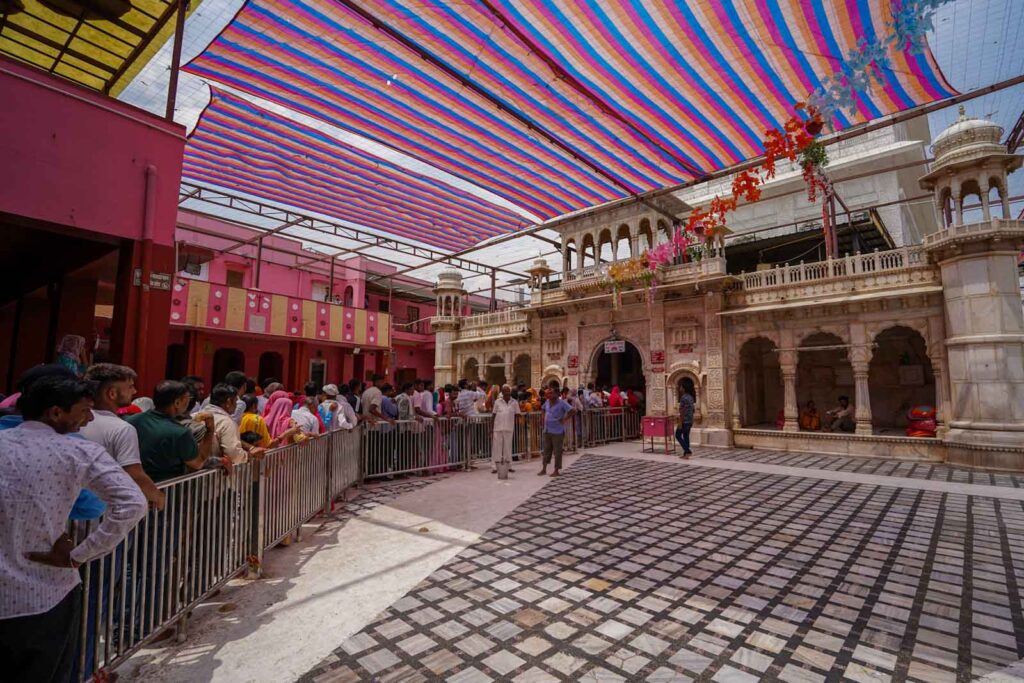
The temple layout funnels visitors toward the main altar where a small statue of Karni Mata sits.
You can’t actually enter this inside bit as a non-Hindu. It is reserved for pilgrims.
But that was ok by me! This area is the most chaotic. The density of both human pilgrims and kabbas increases significantly here.
Here the rats are everywhere. They climb up the silver gates, sleep on the ledges, and scurry over the feet of people waiting to pay their respects.
It was ok to watch here from the sidelines!
3. Spotting the Holy White Rats
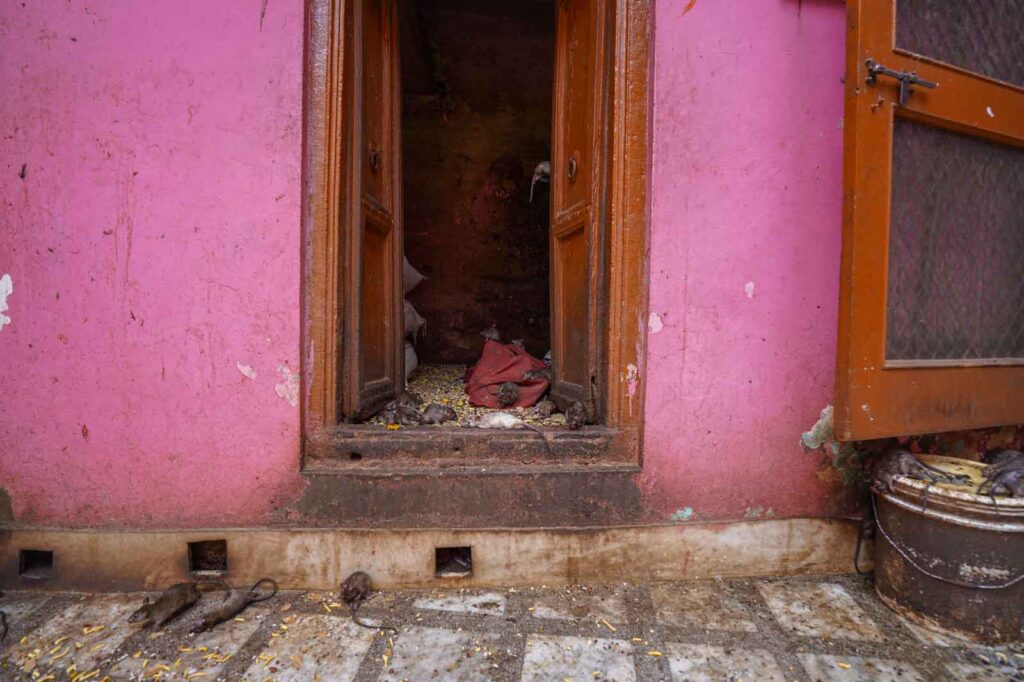
Out of the 25,000 brown and gray rats, there are a handful of white rats that live in the temple. Seeing a white rat is considered an immense blessing.
If you spot one, devotees believe that Karni Mata herself has granted you special favour or that you have seen a direct reincarnation of Karni Mata or her closest sons.
Actually we saw a few white rats. (We must be very lucky!).
If you want to spot one, watch the cracks in the marble—they tend to peek out where the food offerings are freshest!
4. Good Luck
In local belief, if a rat runs over your feet, it is considered incredibly good luck.
Conversely, the ultimate taboo is accidentally stepping on or harming a kabha. If a rat is killed, the rules dictate that you must replace it with a life-sized replica made of solid gold or silver.
Because of this, everyone walks with a distinct, slow, shuffling gait, keeping their eyes glued to the floor. Ours was more a slow shuffle in slight terror and fear of that many rats in general!
Practical Information for Visiting
- Opening Hours: The temple is open daily between 4:00 AM and 10:00 PM. Arriving early in the morning or at sunset is best, as supposedly the rats are highly active during the cooler hours.
- Entry Fee: Admission to the temple is completely free.
- Camera Fees: While entry is free, there is a small fee (around 20 to 50 INR) if you wish to bring a camera or use your phone for photography inside the complex.
- Respectful Dress: Ensure your shoulders and knees are covered, out of respect for the religious nature of the site.
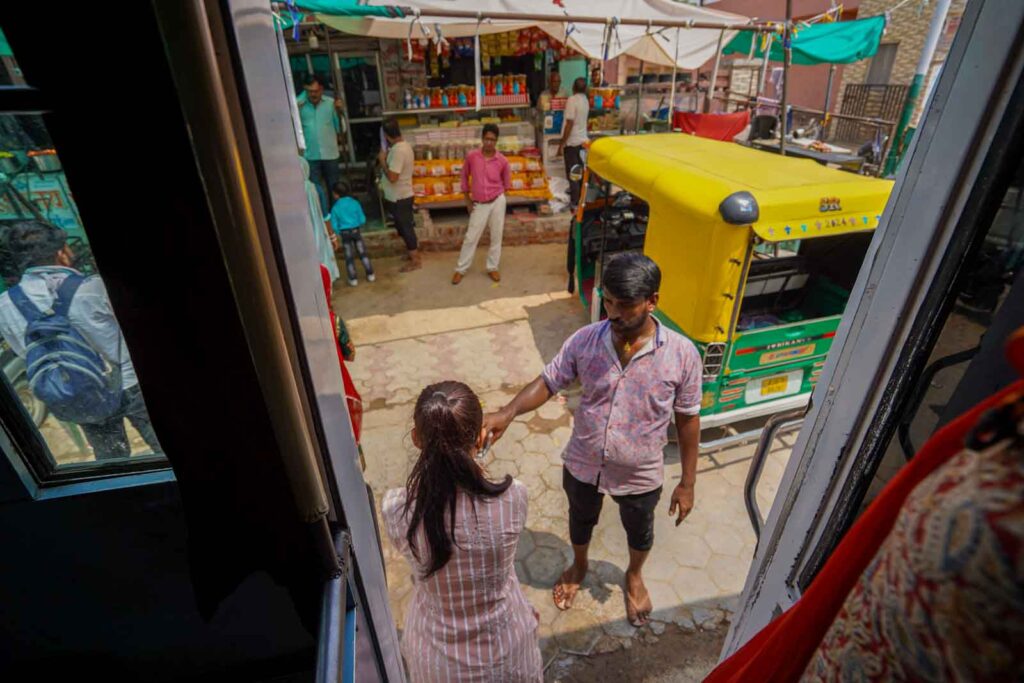
How to Get to the Rat Temple from Bikaner
The Karni Mata Temple is located in the town of Deshnoke, precisely 30km south of Bikaner city.
You have three main transport options:
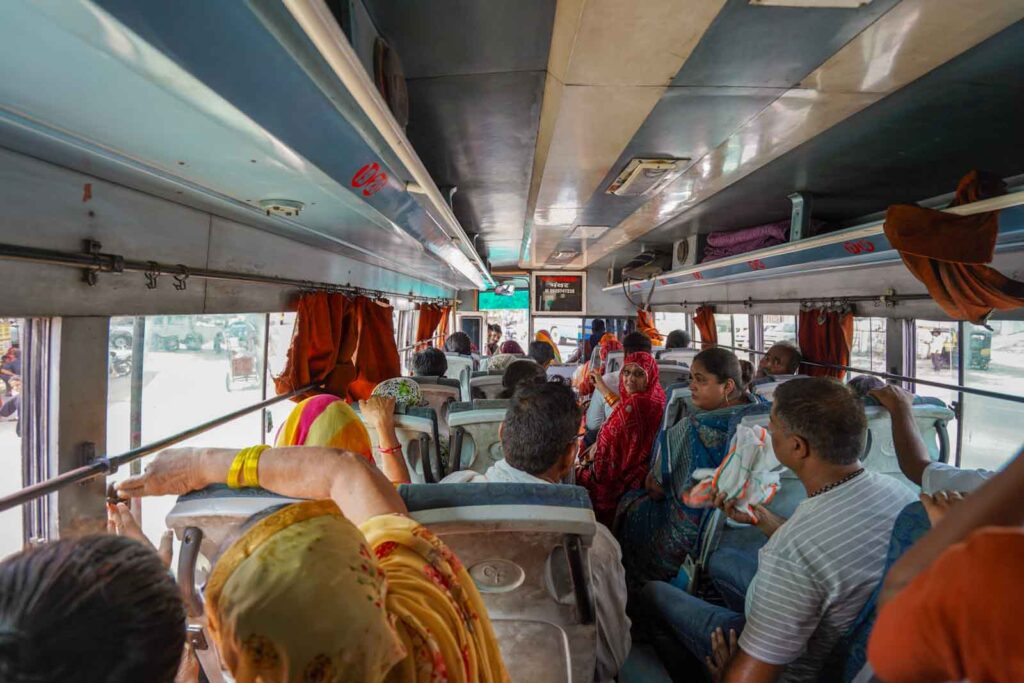
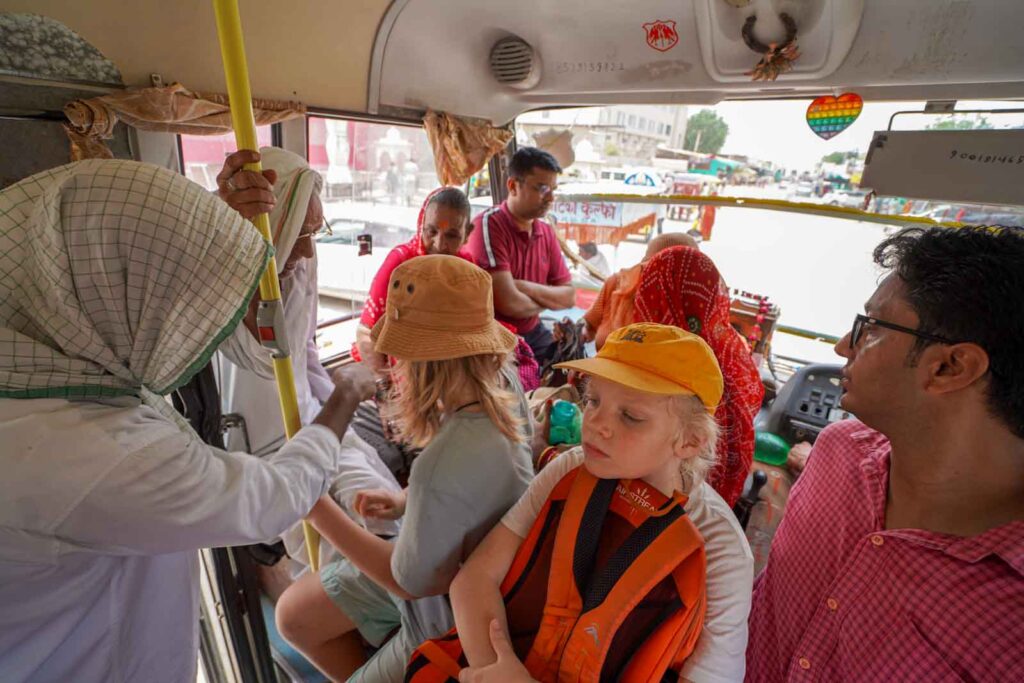
1. Local Bus
This is how we travelled on our most recent trip, and it is incredibly straightforward.
Head to the main Bikaner bus station or the designated stop near the railway station. Buses to Deshnoke and the Rat Temple leave roughly every 20 to 30 minutes.
The journey takes about 45 minutes to an hour, costs pennies, and drops you a short 5-minute walk from the temple gates. It can get hot and crowded, but it’s a great local experience.
2. Auto-Rickshaw (Tuk-Tuk)
You can hire a rickshaw driver from Bikaner for a half-day trip. Ensure you negotiate a round-trip price that explicitly includes the driver waiting for you at the temple for an hour before driving you back to the city.
3. Private Taxi
The most comfortable option, especially in the harsh desert heat of Rajasthan. Any hotel in Bikaner can easily arrange a private AC car to take you to Deshnoke and back.
Getting to Bikaner
Bikaner is well-connected to the rest of the classic Rajasthan travel loop, making it an excellent stop between Jaipur and Jaisalmer.
We even took the train north from Bikaner to Amritsar.
To get to Bikaner for the Rat Temple, you can take the train or bus:
- By Train: Bikaner Junction (BKN) is connected to major cities. A popular option is the PRYJ BKN SF EXP (#12403), which departs Jaipur midday and arrives in Bikaner in the evening.
- By Bus: Frequent government and luxury AC sleeper buses connect Bikaner to Jodhpur (approx. 5 hours) and Jaisalmer (approx. 6 hours).
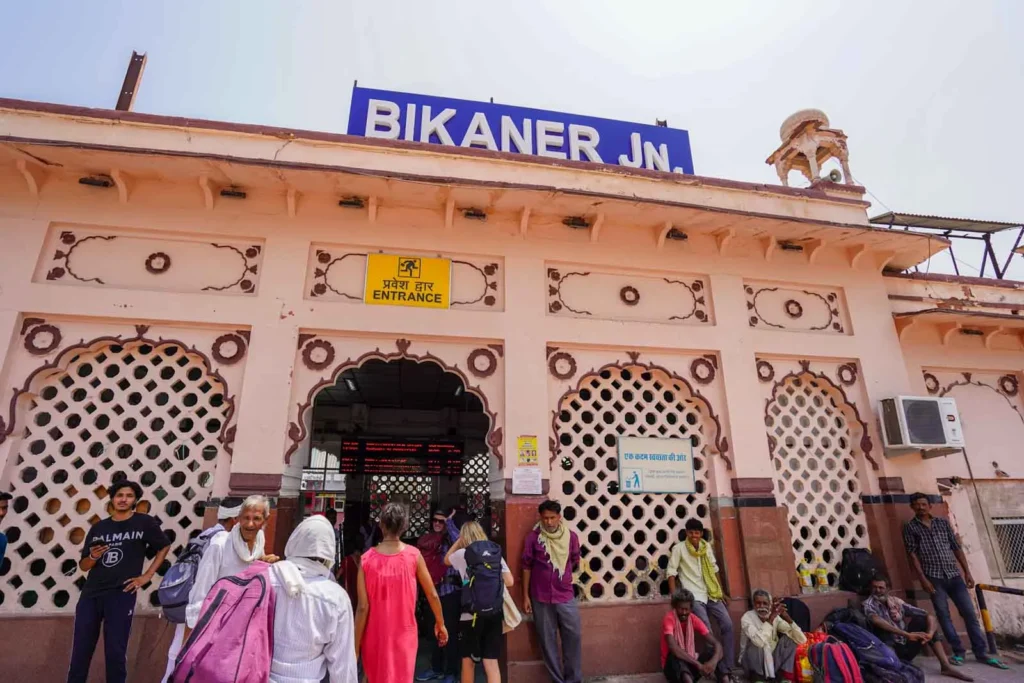
Read All About Travel By Train In India.
Where to Stay in Bikaner
Bikaner has some of the most unique heritage properties in Rajasthan.
Where We Stayed In Bikaner
We stayed at The Prince Haveli in Bikaner.
The Haveli has been lovingly restored and is located right in the centre of the old city. Owner Atik and his staff are very gracious hosts and it is Atik that we did a tour of Things To Do in Bikaner with and recommend.
It is a basic accommodation, but the rooms are comfortable, and it is an affordable way to experience a traditional Haveli in Bikaner.
Other Places to Stay in Bikaner:
- Narendra Bhawan: A luxury splurge in the residence of the last Maharaja.
- Bhanwar Niwas: A stunning heritage haveli in the old city.
- Vesta Bikaner Palace: A great mid-range option with a pool to escape the desert heat.
Do You Need a Guide for the Rat Temple in Bikaner?
No, not officially. But as with all exploring in India it definitely helps!
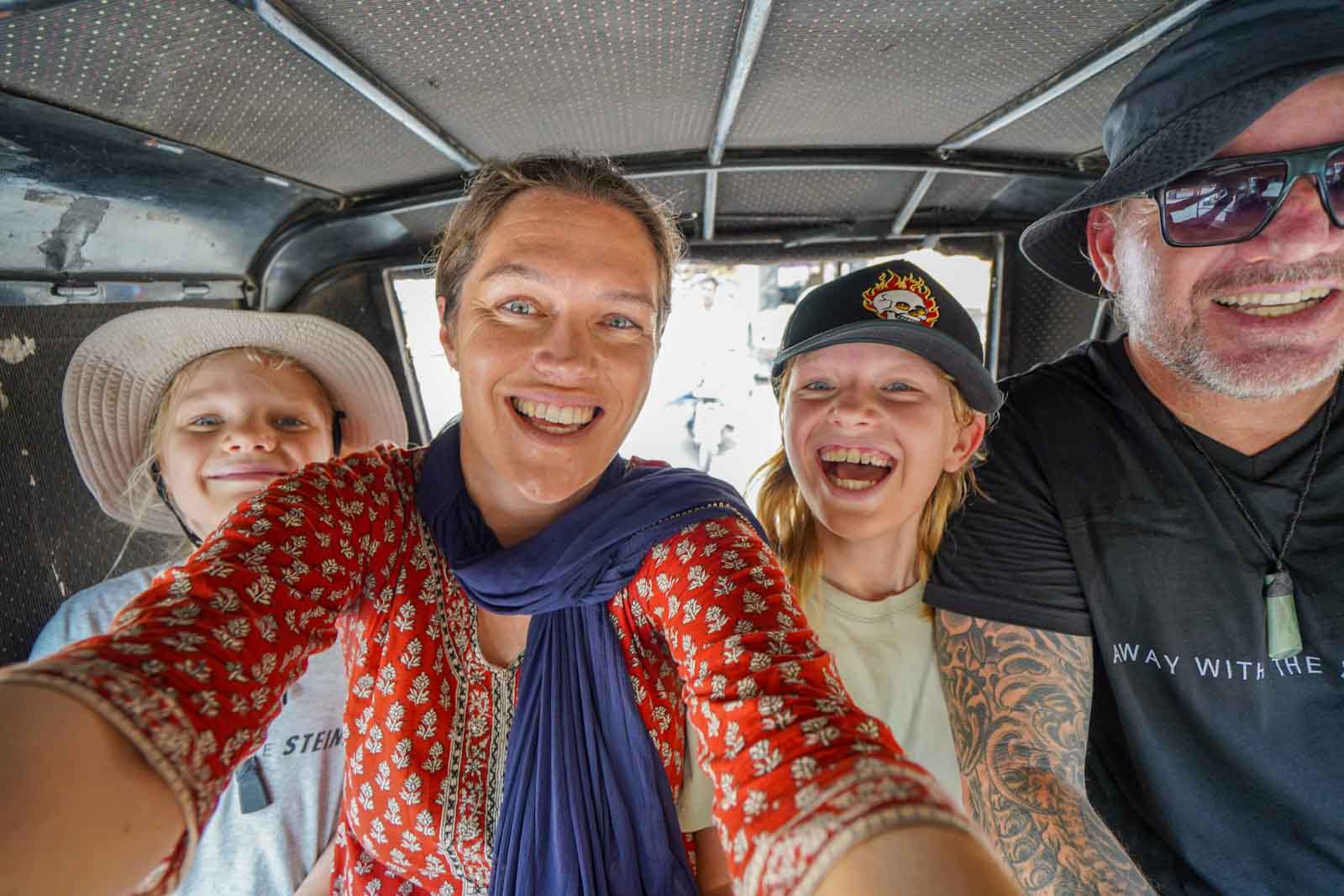
We went on a morning tour in Bikaner to the Old City with Atik from Prince Haveli and enjoyed it so much that we asked if he could take us the next day to the Rat Temple. It was a great experience going with him and one that we highly recommend.
- Contact Atik:
+91 98290 05026
Other Things to Do in Bikaner
Bikaner is incredibly underrated and often skipped by travellers rushing between Jodhpur and Jaisalmer. Don’t make that mistake!
Read about the Things To Do in Bikaner and spend a couple of days exploring these other fantastic sites:
- Junagarh Fort: One of the few major forts in Rajasthan that isn’t built on a hilltop. Built in the 16th century, its interior rooms, golden palaces, and historical museum are among the best-preserved in India.
- Rampuria Haveli: Bikaner is often known as the City of Havelis. The Rampuria cluster features beautiful red sandstone architecture with lace-like carvings that rival anything you’ll see in Jaisalmer.
- The Camel Research Centre: one of the largest camel breeding farms in Asia. You can see hundreds of camels returning from the desert at sunset and try fresh camel milk kulfi (ice cream).
- Bhandashar Jain Temple: Famous for its beautiful, vibrant wall paintings and the local legend that 40,000 kilograms of ghee (clarified butter) were used instead of water in the mortar for its foundation!
Final Thoughts: Should You Visit?
The Karni Mata Rat Temple is undeniably polarising.
Albeit (and agreed) for some, the sheer volume of rodents is too intense to handle. But if you can look past your initial rat preconceptions, it is yet another fascinating experience of the spiritual tapestry of India.
It certainly offers an experience found nowhere else on earth, and is bound to be the story you tell most when you return home!
Planning an epic loop through Rajasthan? Check out our ultimate 3-Week Rajasthan Itinerary or read our survival guide for taking the Train From Bikaner to Amritsar.
Would you visit the Rat Temple in Bikaner? Or is this a step too far for your travel comfort zone? Let us know in the comments below!
Read More India Inspiration
- Ultimate India Food Tour: 10 Must-Try Treats.
- India Tourist e-Visa: Our Step-By-Step Guide.
- 10 Things To Do In Kochi & Kerala.
- Best Tourist SIM Card For India.
- What To Wear In India.
- 10 Tips To Avoid Delhi Belly In India.
- 4-Day Kochi & Kerala Itinerary.
- Travelling India By Bus: Intercity, Tourist & Sleeper Buses.
- 10 Iconic Things To Do In Kolkata.
Travel Planning for India & Beyond
These are the companies we use while traveling and that we would recommend to anyone planning and booking travel.
- Booking.com – The best all-around accommodation booking site. They have the widest selection of budget accommodation and it’s easy to filter and sort into price and availability with all the extras you are looking for personally.
- 12GoAsia – Book trains anywhere in Asia through 12Go.
- Skyscanner – Our favourite flight search engine. They can search small websites and budget airlines that larger search sites often miss. We book all our flights through Skyscanner.
- GetYourGuide – A huge online marketplace for tours and excursions offered all around the world. Everything from walking tours to street-food tours, cooking classes, desert safari’s and more!
- SafetyWing – A global travel insurance that covers people from all over the world while outside their home country. You can buy short or longterm; and even if you are out of the country.
- World Nomads – Make sure you have travel insurance before further planning the Rat Temple and things to do in Bikaner!

Hi! I’m Sarah. I am the self-confessed dreamer, travel-schemer and the main editor behind this blog. I love to write, and it is a dream come true to share so many experiences together and inspire others in our stories.