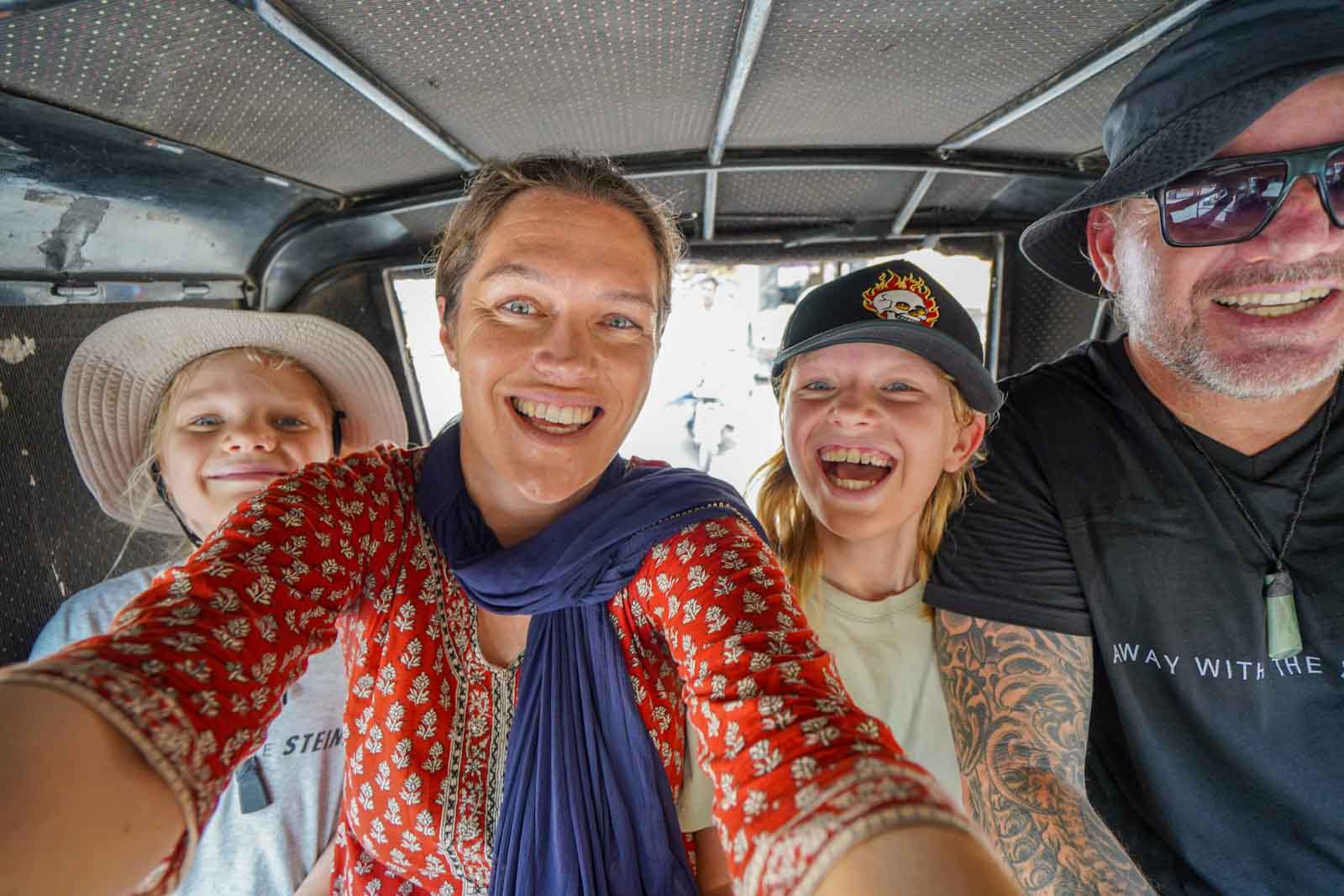
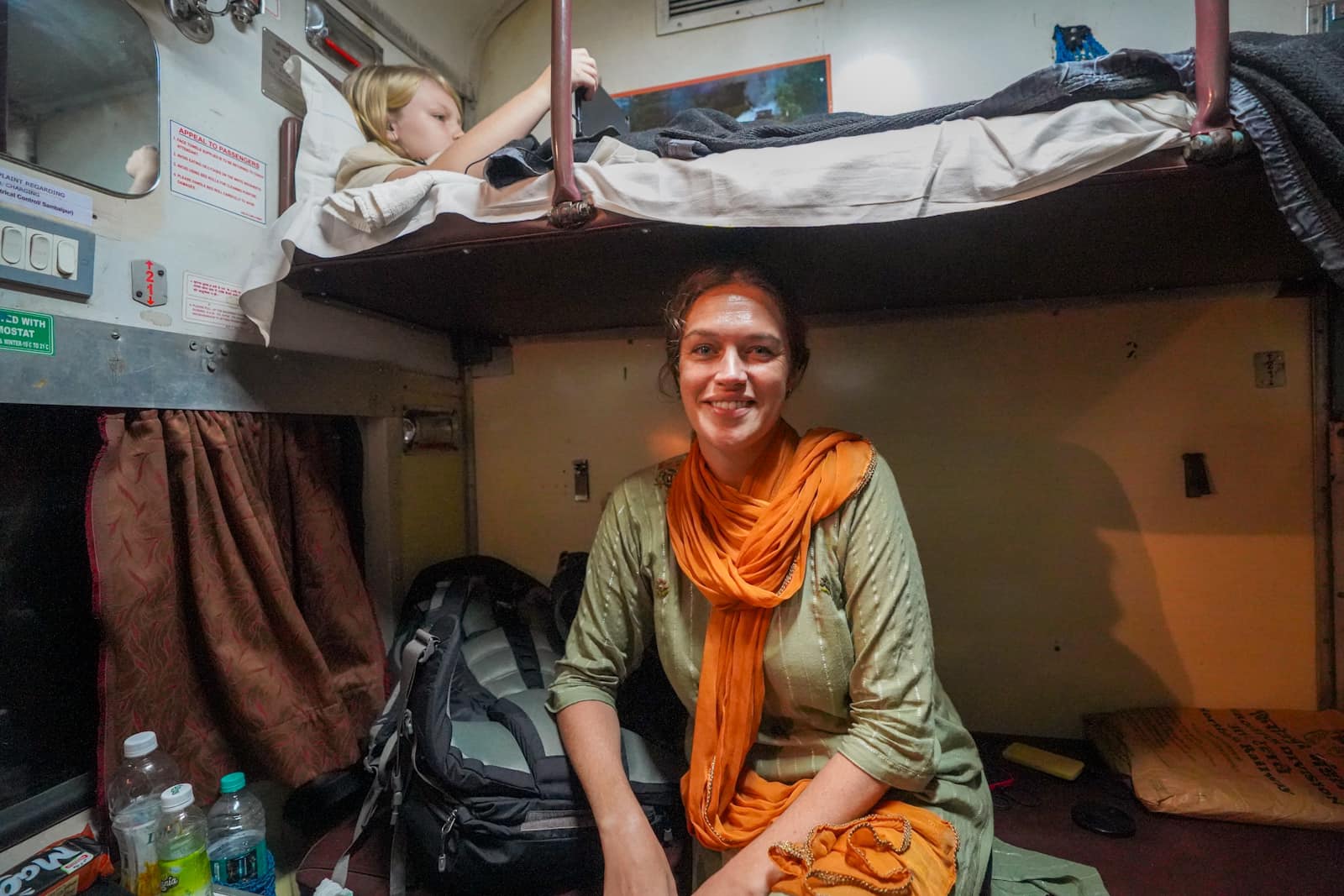
If you’re currently staring at an empty suitcase wondering how on earth to pack for the vibrant, chaotic, and soul-stirring subcontinent that is India, you are not alone. Whether you’re heading to India for a spiritual yoga retreat, an adventure to the desert of Rajasthan, or a bucket-list family holiday, the question of ‘what to wear in India’ is usually the first one that pops up.
I’ll be the first to admit: I completely overpacked for my first trip to India. But after seven trips and months spent crisscrossing the country—from those beaut golden deserts of Rajasthan to the tropics of Kerala—I’ve finally cracked the code.
India isn’t just a destination; it’s a sensory explosion and your clothing choice can impact how much you enjoy your day and your connection with people that you meet.
We’re going to break down everything: from what the locals actually wear to specific advice for men, women, and kids, plus the best places to buy that beautiful traditional gear once you land.
Part 1: Modesty vs. Conservatism – What To Wear in India
Before we talk about fabrics and styles, let’s clear up a common misconception. Is India conservative? Not exactly. Is it modest? Yes, absolutely.
While Bollywood movies might show actresses in skimpy outfits, real-life India remains a traditional society.
Why Modesty Matters
You will find that you are better received, respected, and—importantly—stared at less if you dress modestly.
- Cultural Respect: Many sites you’ll visit are religious. Places like the Jama Masjid in Delhi or the Golden Temple in Amritsar have strict rules: shoulders and knees must be covered, and headscarves are often mandatory.
- Safety and Comfort: It’s a hard truth, but India has a staring culture. There are no two ways about it. Being a foreigner already makes you stand out; then wearing revealing clothing can amplify that attention in uncomfortable ways.
- Climate Control: Loose, modest clothing (like linen or cotton) actually keeps you cooler and protects your skin from the intense sun and mosquitoes.

Part 2: What Do the Locals Wear in India?
Local fashion in India is a breathtaking tapestry that changes from state to state. While you’ll see plenty of Western jeans in Mumbai or Delhi, traditional dress is still the heartbeat of the country.
For Local Women
We have all heard about the colourful Indian Sari. But the best tip about what to wear in India – and what local women actually wear – is about the beautiful Salwar Kameez.
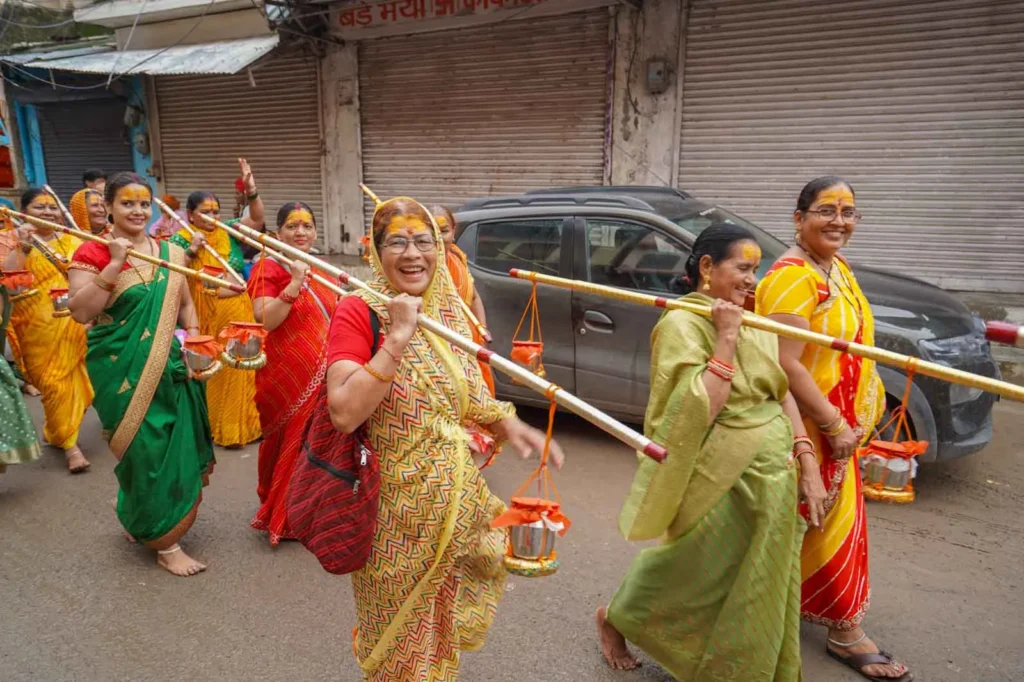
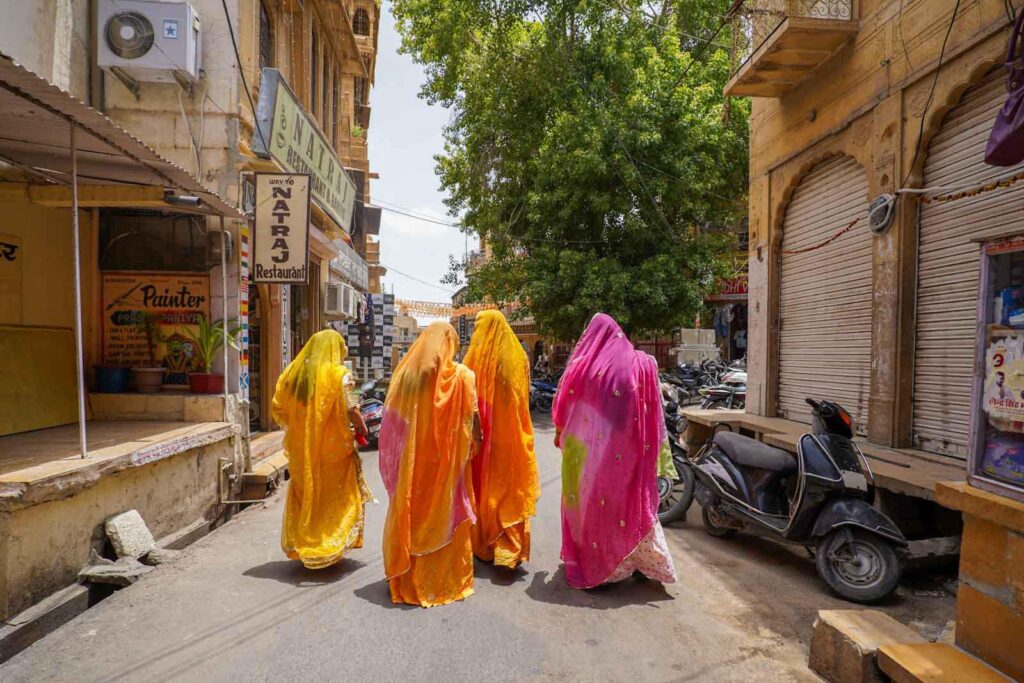
- The Sari: This is the iconic Indian garment—a 4 to 9-meter strip of unstitched cloth draped elegantly over a fitted blouse (choli) and a petticoat. While Bollywood makes them look like everyday youth wear, you’ll notice that it’s often older women and grandmothers who wear them daily.
- Salwar Kameez: This is the uniform of India! It consists of a long tunic (Kameez), loose-fitting trousers (Salwar), and a matching scarf (Dupatta). It is the most practical traditional outfit for travel.
- Kurta/Kurti: A Kurta is a long tunic (usually knee-length), while a Kurti is a shorter version. These are often paired with leggings or jeans in modern urban areas.
For Local Men
Men have a fairly standard and smart form of local dress.
- Kurta Pajama: A long, loose tunic paired with lightweight trousers (they call these ‘pyjamas’!). This is the standard for festivals or formal occasions but is also common for daily wear in cotton fabrics.
- The Lungi & Dhoti: In the south (like Kerala and Tamil Nadu), you’ll see men wearing a Lungi—a sarong-like garment wrapped around the waist. In Rajasthan, farmers often wear a Dhoti, which is a long loincloth expertly wrapped to look like loose trousers.
- Western Wear: In cities, most younger men wear polo shirts or button-downs with trousers or jeans.

Part 3: What Should Female Travellers Wear in India?
For women, the goal is loose and long. You want to avoid anything skin-tight or cleavage-showing.
1. Salwar Kameez: The Ultimate Travel Suit
My top recommendation is to adopt the local style. A cotton Salwar Kameez set is the ultimate travel outfit. It’s airy, covers everything – and looks beautiful in photos!
2. The Power of the Scarf (Dupatta)
Never leave your accommodation without a lightweight scarf. It is the Swiss Army knife of Indian travel! As far as adding to your debacle of what to wear in India; it can:
- Cover your chest if your top is a bit low.
- Cover your head when entering a mosque or temple.
- Act as a shield against dust and pollution.
- Wipe away the inevitable sweat!
3. Trousers and Tops
If you prefer Western clothes, go for linen trousers, culottes, or long maxi skirts. Pair them with loose T-shirts that cover your shoulders. Leggings are fine only if your top or Kurta is long enough to cover your bottom.
4. Can you wear a bikini?
On the tourist beaches of Goa or Varkala, yes. However, be prepared for some stares from domestic tourists. Once you leave the sand, wrap up immediately.
Read our Step-By-Step Guide To Apply For a Tourist e-Visa For India.
Part 4: What Should Male Travellers Wear in India?
Men definitely have it easier in India, but there are still soft rules to follow.
- Ditch the Tank Tops: In the West, singlets are standard summer wear. In India, they are considered undershirts. Wearing one in public looks a bit like walking around in your underwear. Stick to T-shirts or collared polo shirts.
- The Shorts Dilemma: While you won’t be yelled at for wearing shorts, you will be the only one wearing them. Most Indian men wear long trousers even in 40°C heat. If you do wear shorts, make sure they go past the knee.
- Temples: You must wear long trousers to enter most religious sites. Carrying a pair of lightweight temple pants in your bag is a pro move if you’re wearing shorts that day.
Part 5: What Should Children Wear?
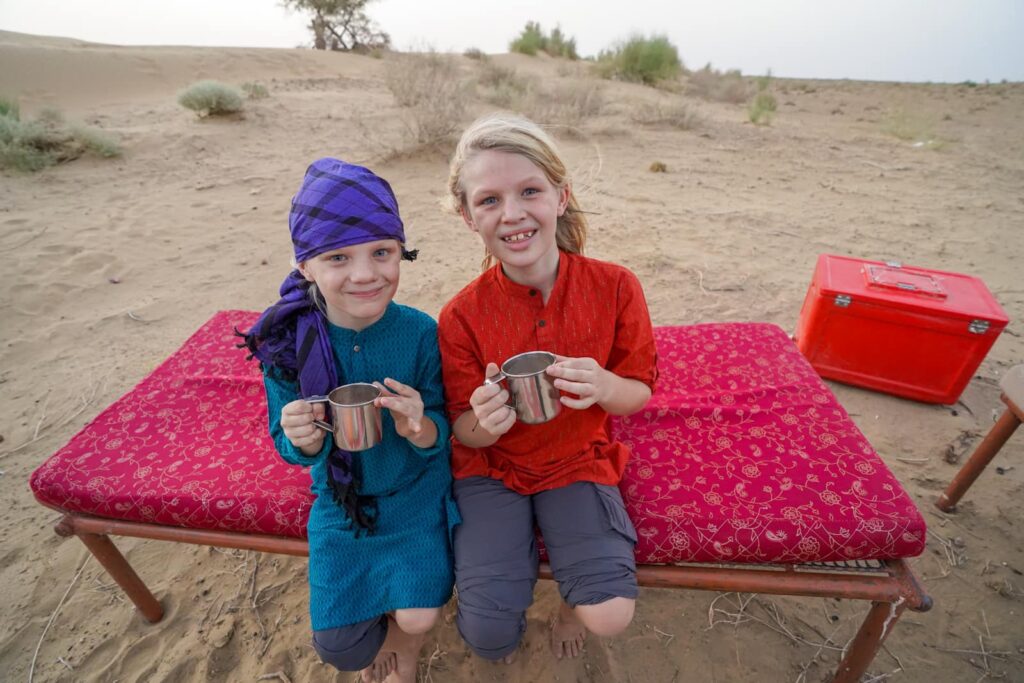
Traveling with kids (like our two!) adds another layer. Generally, the rules are much more relaxed for children, but we still follow the “modesty-lite” approach.
- For Girls: Light cotton dresses or leggings with t-shirts. As they hit 10–12 years old, they should start moving toward the more modest standards of adult women.
- For Boys: Shorts and T-shirts are perfectly fine for young boys.
- Sun Protection: This is the biggest priority. Wide-brimmed hats and high-SPF clothing are essential because the Indian sun is unforgiving.
Part 6: Packing Tips & Footwear – What To Wear in India
The streets in India can be… intense. Between the rubble, the crowds, and the more-than-occasional cow dung, you need sturdy footwear.
- Walking Shoes/Sneakers: Essential for long days of sightseeing.
- Sturdy Sandals: (Like Birkenstocks or Tevas) Great for the heat but ensure they have a good grip.
- Flip-Flops (Jandals): I swear by our Jandals for most of our lives. But as far as footwear and what to wear in India, use these only for inside your hotel or in public showers. I don’t recommend wearing them on the streets of Delhi unless you want very dirty feet!
Packing List Essentials
My best advice is not to overthink it too much. India does have hugely modern cities with shopping malls and everything you need if you’ve forgotten anything.
Though as far as tips to make that at-home packing feel a bit more confident, we recommend:
- Natural Fabrics: Stick to 100% cotton, linen, or bamboo. Synthetic fabrics (like polyester) will make you feel like you’re trapped in an oven.
- A ‘Temple Outfit’: One dedicated set of clothes that is clean and meets all modesty requirements.
- Laundry Bag: You will sweat. A lot. Most guest houses offer cheap laundry services that return your clothes the next day.
Part 7: Where to Buy Shalwar Kameez & Kurtas
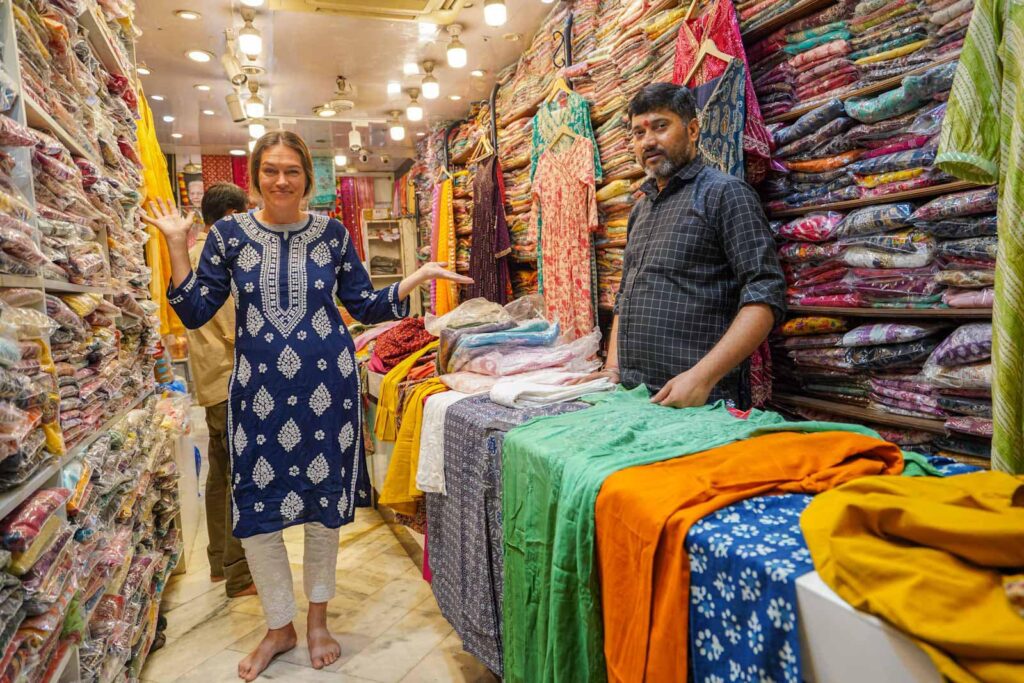
One of the best things you can do is arrive with a half-empty pack or suitcase and shop on your first day. Not only is it cheaper, but you’ll also feel more like you blend in (as much as a blonde Kiwi family can!).
This is one of our favourite parts of arriving in India for travel.
We always take our Group Trips out shopping on the first day in New Delhi to get sorted with practical (and beautifully colourful) clothes to wear in India as a traveller.
Shopping in Delhi
If you are feeling up to it (which we wholeheartedly recommend) head to the market first and find beautiful Kurta’s.
- Sarojini Market: This is my absolute favourite. It is a maze of stalls where you can find beautiful Kurtas for 300–800 INR ($4–$10 USD). You can get a full mid-range Salwar Kameez set for about 2,000 INR ($24 USD).
- Main Bazar (Paharganj): Great for hippie style travel clothes, harem pants, and cheap scarves.
High-Street Brands (Malls)
If you prefer a fixed-price, air-conditioned experience with fitting rooms, head to a mall and look for these reputable brands:
- FabIndia: High quality, ethical, and beautiful patterns.
- Anokhi: Famous for their hand-block prints.
- Sabhyata: Great for modern, trendy Kurtas.
- Max or Shoppers Stop: Great for budget-friendly basics.
Part 8: Dressing for the Seasons
India is massive, and the weather varies wildly.
- Winter (Nov–Feb): In North India (Delhi, Rajasthan), it gets surprisingly chilly at night! You’ll need a light jacket or a fleece. In the South, it’s still tropical.
- Summer (March–May): This is the ‘Heatwave’ season. Wear the loosest, thinnest cotton you own.
- Monsoon (June–Sept): It’s humid and wet. Avoid long skirts or trousers that drag on the ground, as they will get soaked and muddy. Waterproof sandals are better than sneakers here.
Final Thoughts: What To Wear in India
The best part about dressing for India is the permission to be bold. Back home, I might stick to neutrals, but in India, I love wearing bright oranges, deep blues, and vibrant reds and oranges.
The locals take great pride in their clothing, and when you put in the effort to dress respectfully and colourfully, it opens doors. You’ll find people are more likely to strike up a conversation, offer advice, or simply give you a warm smile of appreciation.
Don’t overthink it—pack the basics, buy the rest there, and prepare to fall in love with the most colourful wardrobe you’ve ever owned.
Happy travels!
Accommodation: Where to Stay in India
Pigeons aside (Ajmer) there are some great places to stay in India.
Where We Stay in Delhi
- New Delhi Airport – Mid-Range: Taurus Sarovar Portico
Beautiful hotel only a few km’s from Delhi International Airport. A great first stop arriving in India with buffet breakfast included and a restaurant onsite. - Delhi – Budget: Hotel Hari Piorko
Good location in the heart of the Main Bazaar, Delhi. Close to restaurants and train station. No view from rooms. - Delhi – Budget: Smyle Inn
Extremely basic hotel in small back alley. Very friendly, helpful staff and simple breakfast included. Just off Main Bazaar.
Travel Planning for India & Beyond
These are the companies we use while traveling fulltime as a family and that we would recommend to anyone planning and booking travel.
- Booking.com – The best all-around accommodation booking site that constantly provides the cheapest and lowest rates. They have the widest selection of budget accommodation and it’s easy to filter and sort into price and availability with all the extras you are looking for personally.
- Skyscanner– This is by far our favourite flight search engine. They are able to search small websites and budget airlines that larger search sites often miss. We book all our flights through Skyscanner.
- GetYourGuide– Get Your Guide is a huge online marketplace for tours and excursions offered all around the world. Everything from walking tours, to street-food tours, cooking classes, desert safari’s and more!
- SafetyWing – A global travel insurance that covers people from all over the world while outside their home country. You can buy it short or longterm; and even if you are out of the country.
- World Nomads – Tailored travel insurance (including for those who have already left home) – MAKE SURE YOU HAVE GOOD TRAVEL INSURANCE BEFORE TRAVELING TO INDIA!

Hi! I’m Sarah. I am the self-confessed dreamer, travel-schemer and the main editor behind this blog. I love to write, and it is a dream come true to share so many experiences together and inspire others in our stories.